What is the LRT yield strategy
Liquid Restaking Tokens (LRTs) represent a distinct evolution in the Ethereum staking landscape, moving beyond the single-layer utility of Liquid Staking Tokens (LSTs). While LSTs like stETH primarily unlock liquidity for staked ether, LRTs introduce a "nesting doll" yield structure by restaking that liquidity into EigenLayer. This process allows the underlying ether to secure not just the Ethereum network, but also a growing array of Actively Validated Services (AVSs) such as oracles, sequencers, and bridges.
This multi-layer approach transforms the yield strategy from a passive income model into an active infrastructure play. By repurposing staked ether to support external systems, LRT providers create a composite yield that combines base protocol rewards with the economic security premiums paid by AVSs. This structure effectively layers risk and reward, offering higher potential returns than traditional staking but requiring a deeper understanding of the underlying security assumptions and smart contract complexities.
The role of EigenLayer is central to this model, acting as the middleware that enables this composability. It allows validators to delegate their security to new protocols without running additional hardware, thereby "restaking" their existing capital. For the LRT yield strategy, this means the token holder is not just betting on Ethereum's consensus, but also on the success and security of the broader ecosystem of services built on top of it.
LST vs. LRT yield sources
Liquid staking tokens (LSTs) and liquid restaking tokens (LRTs) both offer yield, but the infrastructure behind them is fundamentally different. An LST is essentially a wrapped version of your staked ETH. When you stake ETH, you receive a token like stETH or rETH that represents your claim on the underlying asset plus the standard consensus rewards from the Ethereum network. It’s a straightforward one-to-one relationship with the base layer.
LRTs build on top of that foundation. They take an LST and restake it into Actively Validated Services (AVSs) or other protocols. This process allows your capital to generate yield from multiple sources simultaneously. Instead of just the base Ethereum staking reward, an LRT aggregates rewards from the AVSs your restaked capital supports. This stacking mechanism is what distinguishes the LRT yield strategy from traditional liquid staking.
The tradeoff is complexity. While LSTs offer a single, predictable yield stream from Ethereum consensus, LRTs introduce additional smart contract layers and external dependencies. This can lead to higher potential returns but also introduces new vectors for risk, such as slashing events from AVSs or protocol-specific vulnerabilities. Understanding where the yield comes from is essential for evaluating the LRT yield strategy in 2026.
| Feature | LST | LRT |
|---|---|---|
For more details on how these tokens function, see Three Sigma's explanation of LSTs vs. LRTs or Liquid Collective's breakdown. These resources provide deeper technical context on the underlying mechanisms.
Key infrastructure providers in the LRT market
The LRT yield strategy relies on a handful of major protocols that act as the backbone for restaking. These providers don't just offer a yield rate; they build the infrastructure that allows staked ETH to be used as collateral for other on-chain activities. The leading names in this space are EtherFi, Renzo, and Puffer. Each has taken a slightly different approach to how they manage the underlying EigenLayer contracts and the resulting liquid restaking tokens (LRTs).
EtherFi stands out for its "Liquid Staking Derivatives" (LSDs) and "Liquid Restaking Tokens" (LRTs) framework. They focus on creating a seamless bridge between traditional staking and active validation. Their infrastructure allows users to deposit ETH and receive vETH, which can then be restaked to earn additional yield from EigenLayer services. This dual-layer approach is central to the LRT yield strategy, as it maximizes the utility of the staked asset.
Renzo takes a more modular approach. Instead of trying to control every part of the stack, Renzo provides a protocol that lets users deposit stETH or wstETH and receive ezETH. This token represents a share of the underlying staked assets plus the yield from restaking. Renzo's infrastructure is designed to be flexible, allowing integrators to build their own strategies on top of their base protocol. This modularity has made Renzo a favorite for developers looking to build complex LRT yield strategies.
Puffer Finance focuses on "native restaking." They allow users to deposit ETH directly and receive pufETH, which is automatically restaked to EigenLayer. Puffer's infrastructure is built to handle the complexity of managing multiple validator keys and ensuring that the restaking process is secure and efficient. By automating the restaking process, Puffer makes it easier for users to participate in the LRT yield strategy without needing to manage the technical details themselves.
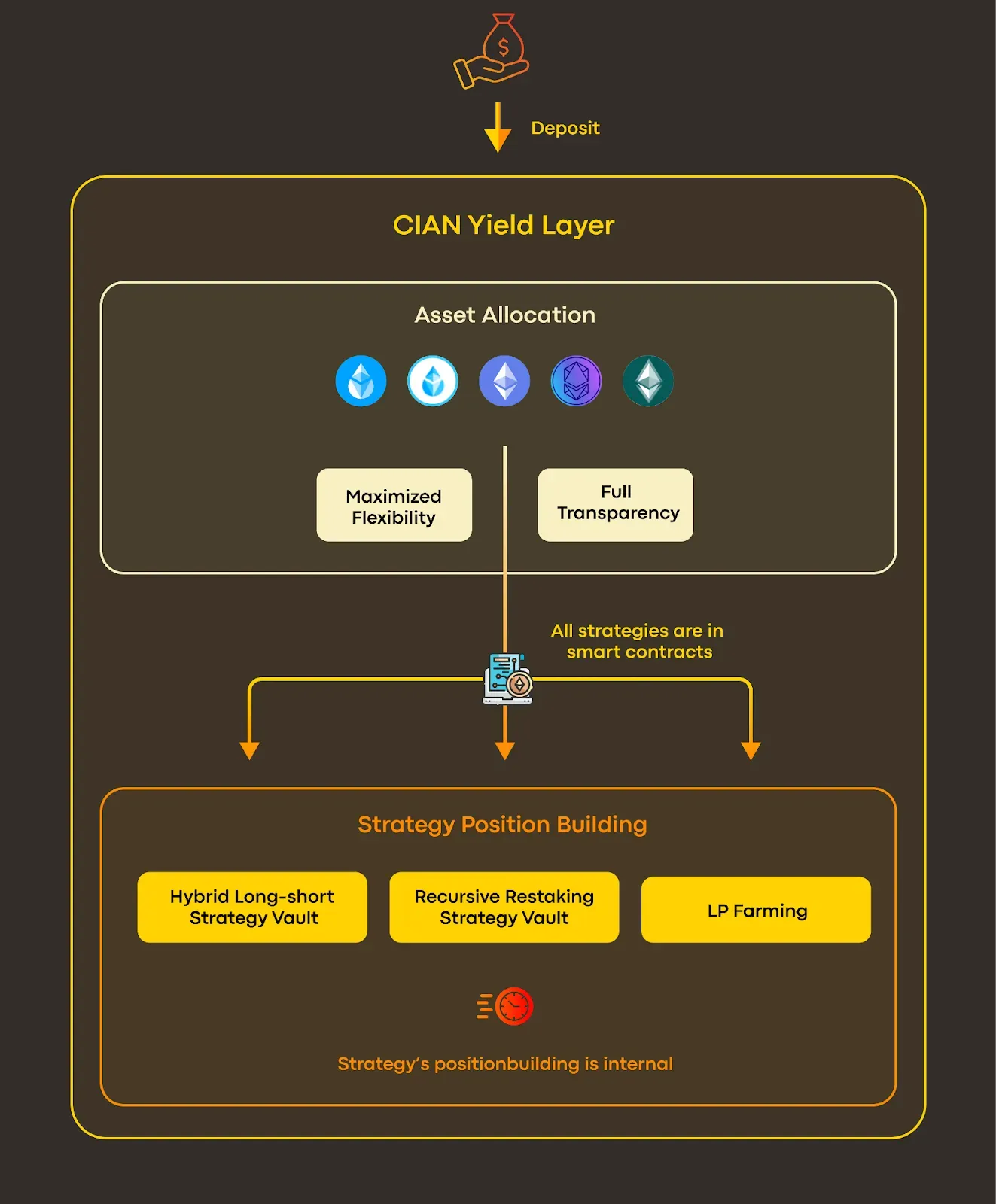
These three protocols represent the core of the LRT infrastructure. While there are other players, EtherFi, Renzo, and Puffer have established themselves as the primary options for users looking to engage in LRT yield strategies. Their different approaches offer various trade-offs in terms of complexity, yield potential, and ease of use. Understanding these differences is key to choosing the right infrastructure for your strategy.
Tracking LRT Yield Strategy Performance
Monitoring an LRT Yield strategy requires more than just watching a single dashboard. Because these products layer EigenLayer restaking fees on top of base Ethereum staking rewards, the yield is dynamic and often split across multiple protocols. Investors need to track both the underlying asset performance and the health of the smart contracts managing the restaking layers.
The most reliable way to gauge baseline performance is through the Ethereum staking index. This metric shows the current APY for native ETH staking, which serves as the floor for most LRT products. You can view live staking trends and price action using the chart below. When ETH staking yields dip, LRT protocols often adjust their fee structures or restaking allocations to maintain competitiveness.
For protocol-specific data, you should look at the official dashboards of the LRT providers themselves. These interfaces display real-time restaking rewards, slash risk exposure, and the current distribution of points or airdrop allocations. Since LRTs are complex structured credit instruments, relying on third-party aggregators alone can be misleading; always cross-reference with the protocol's on-chain data to verify actual yield distribution.
Finally, keep an eye on total value locked (TVL) trends. A sudden drop in TVL for a specific LRT often signals that investors are reallocating capital to higher-yielding or safer alternatives. This movement is a key indicator of market sentiment toward that particular yield strategy. By combining on-chain data with official protocol metrics, you can build a clearer picture of how your LRT investment is actually performing.
Risks in the LRT Yield Ecosystem
The LRT yield strategy amplifies returns by layering restaking atop standard staking, but this complexity introduces distinct infrastructure risks. Unlike simple staking, LRTs involve multiple smart contracts that must coordinate to manage slashing penalties and yield distribution. If one layer fails, the entire chain can be affected, making the system more fragile than single-layer alternatives.
Smart contract complexity is the primary vulnerability. Each additional protocol in the restaking stack adds attack surface. Audits can only cover a snapshot in time, leaving room for unforeseen interactions between EigenLayer contracts and LRT wrappers. A bug in a peripheral contract can drain liquidity or freeze assets, as seen in past DeFi exploits where logic errors led to significant losses.
Slashing events remain a critical concern. When restaked assets are used to secure external services like oracles or rollups, they become liable for malicious behavior. If a validator acts improperly, the resulting penalty is shared across all protocols relying on that stake. This means your LRT yield can be wiped out not just by market drops, but by infrastructure failures in unrelated services.
Depegging risks also loom large. LRT tokens often trade at a premium to their underlying staked ETH. If market confidence wavers or if slashing fears spike, this premium can evaporate rapidly. The disconnect between the token price and its intrinsic yield value creates a dangerous feedback loop during stress periods.
Building a sustainable LRT portfolio
Relying on a single Liquid Restaking Token (LRT) protocol creates a concentrated risk profile. If that specific protocol faces a smart contract vulnerability, a slashing event, or a governance dispute, your entire position is exposed. Diversification across multiple LRTs acts as a buffer, ensuring that a failure in one infrastructure layer doesn't collapse your yield strategy.
To build resilience, you should spread exposure across different LRT providers and their underlying Liquid Staking Derivatives (LSDs). Protocols like EigenLayer, Ether.fi, and Puffer each have distinct risk parameters and reward mechanisms. By allocating capital to several LRTs that restake the same base LSDs (such as stETH or rETH), you gain access to the same AVS (Actively Validated Services) rewards while mitigating the risk of any single point of failure.
This approach mirrors how traditional finance diversifies across asset classes. Instead of betting on one high-yield instrument, you construct a basket of LRTs that collectively capture the broader restaking ecosystem. This reduces volatility and ensures that your yield strategy remains robust even if one protocol underperforms or encounters technical issues.
Helpful gear
Use these product recommendations as a starting point, then choose the size, material, and price point that fit how you actually use the gear.



As an Amazon Associate, we may earn from qualifying purchases.
No comments yet. Be the first to share your thoughts!