What liquid restaking tokens actually are
Liquid restaking tokens (LRTs) are not just another type of staking derivative. To understand the "real" APY, you have to look at the stack. Liquid staking tokens (LSTs), like stETH or rETH, represent your staked ETH on the base layer. They give you liquidity back while your ETH secures Ethereum. The yield is straightforward: it’s the base network staking reward.
LRTs take that LST and restake it. This is where the complexity—and the risk—begins. Instead of just securing Ethereum, your LRT protocol pledges your assets to additional services called Actively Validated Services (AVSs). These AVSs might be oracles, data availability layers, or bridge validators. In exchange for this extra security, you earn additional rewards.
This structure mirrors structured credit in traditional finance. You are essentially selling security services twice: once to Ethereum and again to the AVSs. While this can boost nominal yields, it also introduces smart contract risk, slashing risk from the AVSs, and complexity in yield distribution. The "real" APY is the net result after these risks are accounted for, not just the sum of the rewards.
Understanding this distinction is critical. An LST is a single-layer asset. An LRT is a multi-layer financial instrument. The yield comes from multiple sources, and so does the risk.
Deconstructing the real yield components
To understand where the yield actually comes from, you have to look past the headline APY. Liquid Restaking Tokens (LRTs) don't generate income from a single source; they combine two distinct revenue streams. The first is the base yield from Ethereum staking. The second is the additional incentive provided by restaking protocols like EigenLayer.
The base layer is straightforward. When you stake ETH, you earn the network's standard validator rewards. This is the "safe" floor of your return, derived from transaction fees and block issuance. It is predictable, though it fluctuates with network activity. Think of this as the foundation of a house—steady, but not the feature that adds extra square footage.
The second layer is where the complexity—and the risk—enters. Restaking protocols allow you to delegate your staked ETH to secure other services, such as oracles, bridges, or data availability layers. In exchange for this extra security work, you earn additional points or tokens. This is the "restaking yield." It is often marketed as the primary benefit of LRTs, but it is highly variable and dependent on the specific Actively Validated Services (AVS) you choose to support.
When you see an LRT advertising a 15% APY, it is likely a composite of both. The base ETH staking might be 3-4%, while the restaking incentives make up the remaining 11-12%. This distinction matters because restaking yields can drop to zero if the protocols offering them shut down or if the underlying AVSs fail to generate demand. Understanding this split helps you separate sustainable income from temporary promotional incentives.
Infrastructure risks in restaking protocols
Liquid restaking tokens (LRTs) promise higher yields by layering staked assets across multiple networks, but this complexity introduces significant technical vulnerabilities. Unlike traditional staking, where your ETH secures only the Ethereum mainnet, LRTs deploy that same capital to secure additional services like data availability layers or oracles. This multi-layer structure means your funds are exposed to a wider range of failure points.
The primary technical risk lies in smart contract complexity. Each new integration adds code that must be audited and maintained. If a protocol managing these restaked assets has a vulnerability, it can lead to total loss of capital. This is not just theoretical; the interconnected nature of these protocols means a failure in one layer can cascade through the entire system.
Slashing events present another critical danger. When you restake, you are often required to run validator nodes or delegate to them. If these nodes misbehave—such as by going offline or signing invalid blocks—they can be "slashed," resulting in a penalty to your staked assets. Because LRTs often aggregate stakes across many validators, a single bad actor or widespread technical glitch can trigger slashing across your entire position.
Understanding these risks is essential for calculating real APY. The "real" yield you receive is the nominal rate minus the expected loss from slashing and contract failures. For many protocols, this difference is substantial, and in worst-case scenarios, the risk of total loss outweighs any yield benefit.
| Risk Factor | Description | Impact on Yield |
|---|---|---|
| Slashing | Penalties for validator misbehavior | Direct reduction of staked capital |
| Smart Contract Exploit | Vulnerability in protocol code | Potential total loss of funds |
| Oracle Failure | Incorrect data feeding to contracts | Cascading errors and liquidations |
| Network Congestion | High gas fees or downtime | Reduced net yield due to costs |
As noted by industry experts, LRTs can undertake various market-driven tasks, each carrying unique risk profiles and yields due to diverse restaking combinations. This diversity is both a feature and a bug: while it allows for higher returns, it also means the risk profile is highly variable and often opaque.
To mitigate these risks, investors should focus on protocols with transparent slashing insurance and robust security audits. However, even with these measures, the inherent complexity of restaking infrastructure means that higher nominal yields often come with a higher probability of significant, irreversible losses.
Essential tools for yield tracking
Nominal APY figures are often marketing fiction. To track real performance, you need dashboards that separate base staking rewards from volatile incentive emissions. Relying on a single number hides the infrastructure risks inherent in liquid restaking.
Use specialized DeFi analytics platforms like DefiLlama or the native dashboards provided by major protocols. These tools show you the actual yield composition, including any token rewards that may depreciate quickly. Without this visibility, you are betting on price appreciation rather than yield generation.
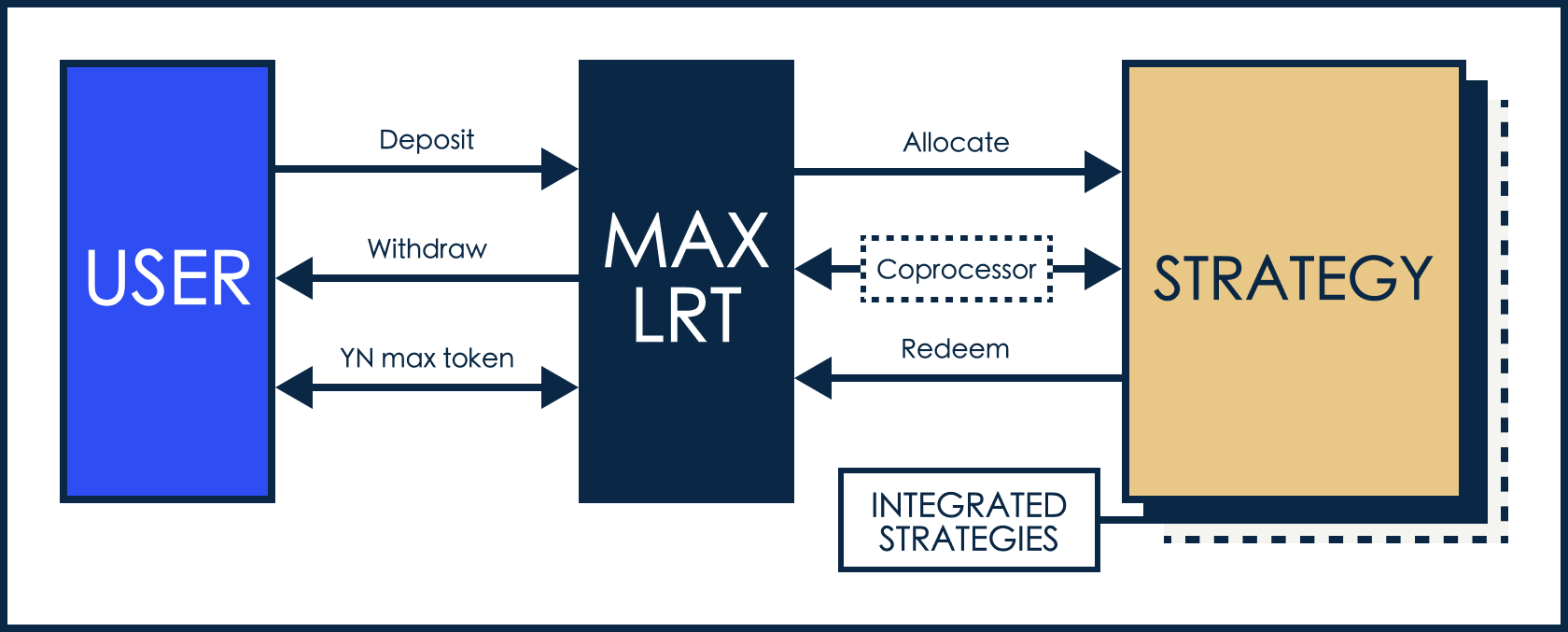
The diagram above illustrates a typical LRT strategy flow. It highlights how your underlying assets move through multiple layers. Tracking these layers is essential for identifying where yield is generated and where risk is concentrated.
For real-time price action, monitor the LRT token against ETH. Yield does not exist in a vacuum; if the token price drops faster than the yield accrues, you are losing capital. Use a TradingView chart to correlate price movements with yield events.
Comparing top LRT protocols
Liquid restaking tokens (LRTs) layer additional yield on top of base Ethereum staking rewards. This means the "real" APY varies significantly depending on how many Actively Validated Services (AVSs) a protocol integrates and how it distributes those incentives. Comparing these metrics side-by-side helps you separate nominal yields from sustainable returns.
The table below outlines key differences between three major protocols. Note that base yields come from Ethereum staking, while the spread above that represents restaking incentives, which fluctuate with network demand.
| Protocol | TVL (Est.) | Base ETH Yield | Restaking Incentives |
|---|---|---|---|
| Ether.fi | $1.2B | ~3.2% | Variable (ETH + Points) |
| Renzo | $450M | ~3.1% | Variable (Points + Tokens) |
| Puffer | $380M | ~3.3% | Variable (Puffer Tokens) |
When evaluating these options, look beyond the headline APY. Protocols with higher incentive yields often face greater complexity in managing AVS slippage and slashing risks. Always check the official documentation for the specific AVS integrations to understand what security layer is actually being provided.
Frequently asked questions about LRTs
Helpful gear
Use these product recommendations as a starting point, then choose the size, material, and price point that fit how you actually use the gear.



As an Amazon Associate, we may earn from qualifying purchases.
No comments yet. Be the first to share your thoughts!