
How LRT yield stacks up in 2026
Liquid Restaking Tokens (LRTs) generate returns by stacking two distinct yield layers. First, you earn the base yield from staked Ethereum, similar to a traditional liquid staking token. Second, you earn additional rewards by restaking that ETH through infrastructure like EigenLayer, which pays out for securing Actively Validated Services (AVS).
This layered approach creates a higher potential yield than simple staking, but it also introduces compounded risk. The yield is not guaranteed; it depends on the performance of the underlying AVS and the health of the restaking protocol. In 2026, as more services rely on restaked security, the baseline for these rewards may shift, making the source of yield more critical than the total percentage.
To understand where the market stands, it helps to look at the broader Ethereum price action and staking environment. The chart below tracks ETH, providing context for the base layer that supports all LRT strategies.
Comparing top LRT protocols and yields
Liquid restaking isn't a monolith; it's a patchwork of different yield engines. While the goal—earning more from staked assets—remains the same, the mechanisms vary significantly between protocols like Ether.fi, Renzo, and YieldNest. Understanding these structural differences is the only way to manage the inherent smart contract and depeg risks.
The table below breaks down the core mechanics, underlying assets, and primary yield sources for three major players. This isn't just about comparing APYs, which fluctuate daily; it's about understanding what you're actually being paid for.
| Protocol | Primary Asset | Yield Source | Risk Profile |
|---|---|---|---|
| Ether.fi | ETH (eETH) | ETH Staking + EigenLayer PTP | High (Multi-layer smart contract exposure) |
| Renzo | ETH (ezETH) | ETH Staking + EigenLayer PTP + Liquid Staking Derivatives (LSDs) | Medium-High (Diversified yield, but complex interop risk) |
| YieldNest | ETH (rnETH) | ETH Staking + EigenLayer PTP + LRT Strategies | Medium (Focus on yield optimization strategies, e.g., RateX) |
Ether.fi operates as the foundational layer. It aggregates staked ETH and delegates it to EigenLayer for points and rewards. Its yield is relatively straightforward: base staking rewards plus the premium from restaking points. However, holding eETH exposes you to the full weight of both the Ether.fi and EigenLayer smart contract stacks.
Renzo takes a more diversified approach. By allowing ezETH holders to participate in a broader range of yield strategies, including those derived from other liquid staking tokens, Renzo aims to smooth out volatility. This complexity is a double-edged sword; it can boost yields but introduces additional points of failure if one of the integrated yield sources underperforms or faces a hack.
YieldNest positions itself as the "yield optimizer." It doesn't just sit on the staking rewards; it actively deploys strategies like RateX to capture additional value from the EigenLayer ecosystem. This requires a deeper understanding of the underlying strategies. For users comfortable with active management, it can offer superior returns, but it demands a higher level of trust in YieldNest's strategy selection and execution.
Infrastructure Risks and Concentration
Liquid restaking tokens (LRTs) amplify yield by layering protocols, but this complexity introduces structural vulnerabilities that simple staking does not face. The core issue is that LRTs create a fragile web of dependencies. If one layer fails, the damage doesn't stop there; it cascades through the entire system. This is not just a theoretical risk. It is a mechanical reality of how these protocols interact.
Slashing Cascades
The most immediate threat is the slashing cascade. In traditional staking, if a validator acts maliciously, it gets slashed. In LRTs, the stakes are higher because your LRT token represents exposure to multiple restaked assets. If an underlying protocol suffers a slashing event, the value of the LRT can drop instantly. This isn't just a price fluctuation; it's a direct loss of capital tied to the infrastructure's security model. The interconnection means that a failure in one part of the restaking ecosystem can drain value from many LRTs simultaneously.
Liquidity Concentration
Liquidity concentration is another critical flaw. Much of the liquidity for LRTs is funneled through a small number of decentralized exchanges (DEXs) or liquidity pools. This creates a single point of failure. If these pools face a flash loan attack or a sudden liquidity crunch, the LRT's price can decouple from its underlying value. This is not just about market sentiment; it's about the structural integrity of the market itself. When liquidity is thin, even small trades can cause massive price swings, exposing holders to unexpected losses.
Smart Contract Layers
Finally, the sheer number of smart contract layers increases the attack surface. Each LRT protocol adds another layer of code that must be secure. More code means more potential bugs, and more potential for exploitation. A vulnerability in one of these layers can be exploited to drain funds or manipulate prices. This is not a minor inconvenience; it is a systemic risk that threatens the entire restaking narrative.
Understanding these infrastructure risks is not optional for anyone holding LRTs. The yield is attractive, but the cost of failure is high. The 2026 infrastructure shift will likely bring more sophisticated risk management, but for now, the risks remain significant and real. Always assess the underlying protocol's security and liquidity depth before committing capital.
Strategies for sustainable LRT returns
Building sustainable yield from Liquid Restaking Tokens (LRTs) requires moving beyond simple deposit-and-hold approaches. The infrastructure shifts in 2026 demand active management to capture multiple revenue streams while mitigating smart contract and slashing risks. By stacking incentives across different Active Validation Services (AVSs), you can compound returns that single-staking protocols cannot match.
The core of this strategy lies in diversifying your LRT portfolio across protocols that offer distinct yield sources. For example, combining a protocol like Renzo, which provides liquid staking derivatives, with an AVS like RateX allows you to earn both base staking rewards and additional AVS-specific incentives. This approach, often referred to as "stacking," maximizes the yield potential of your initial SOL deposit.
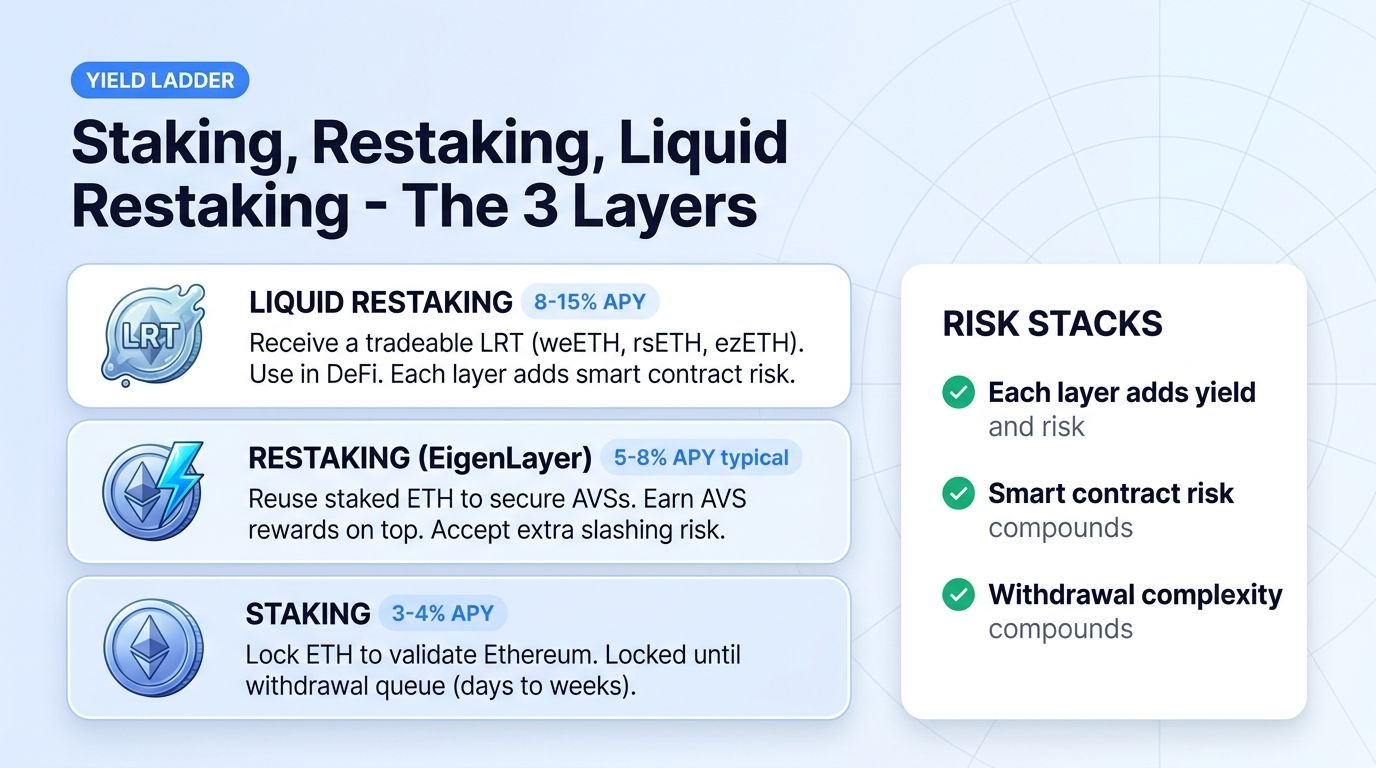
Start by staking your SOL into a liquid restaking token (LRT) such as ezSOL via Renzo. This provides immediate liquidity and base staking rewards, serving as the foundation for further yield optimization.
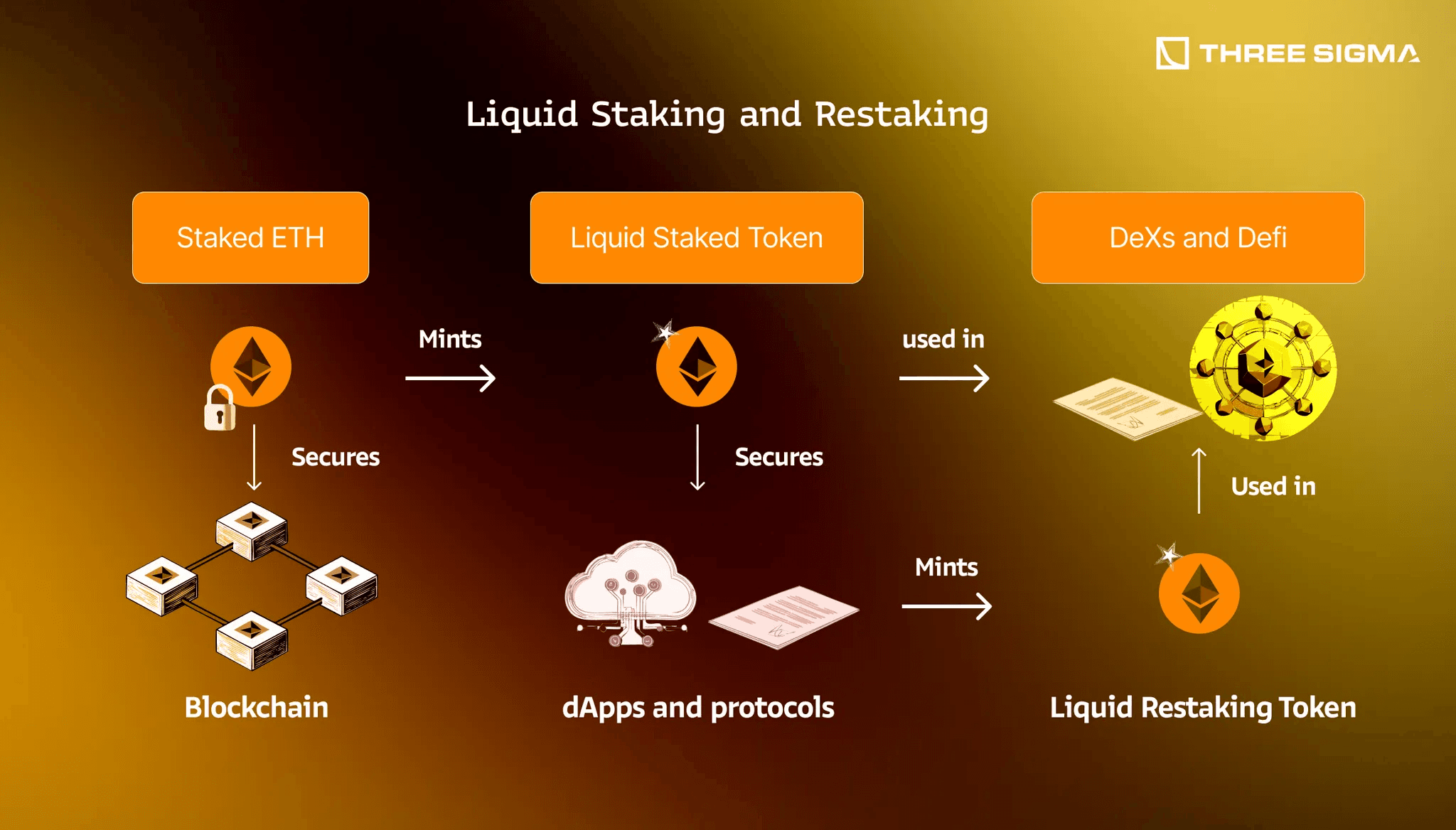
Take your LRT (e.g., ezSOL) and deposit it into an AVS like RateX. This step allows you to earn additional yield from the AVS's specific operations, effectively stacking incentives on top of your initial staking rewards.
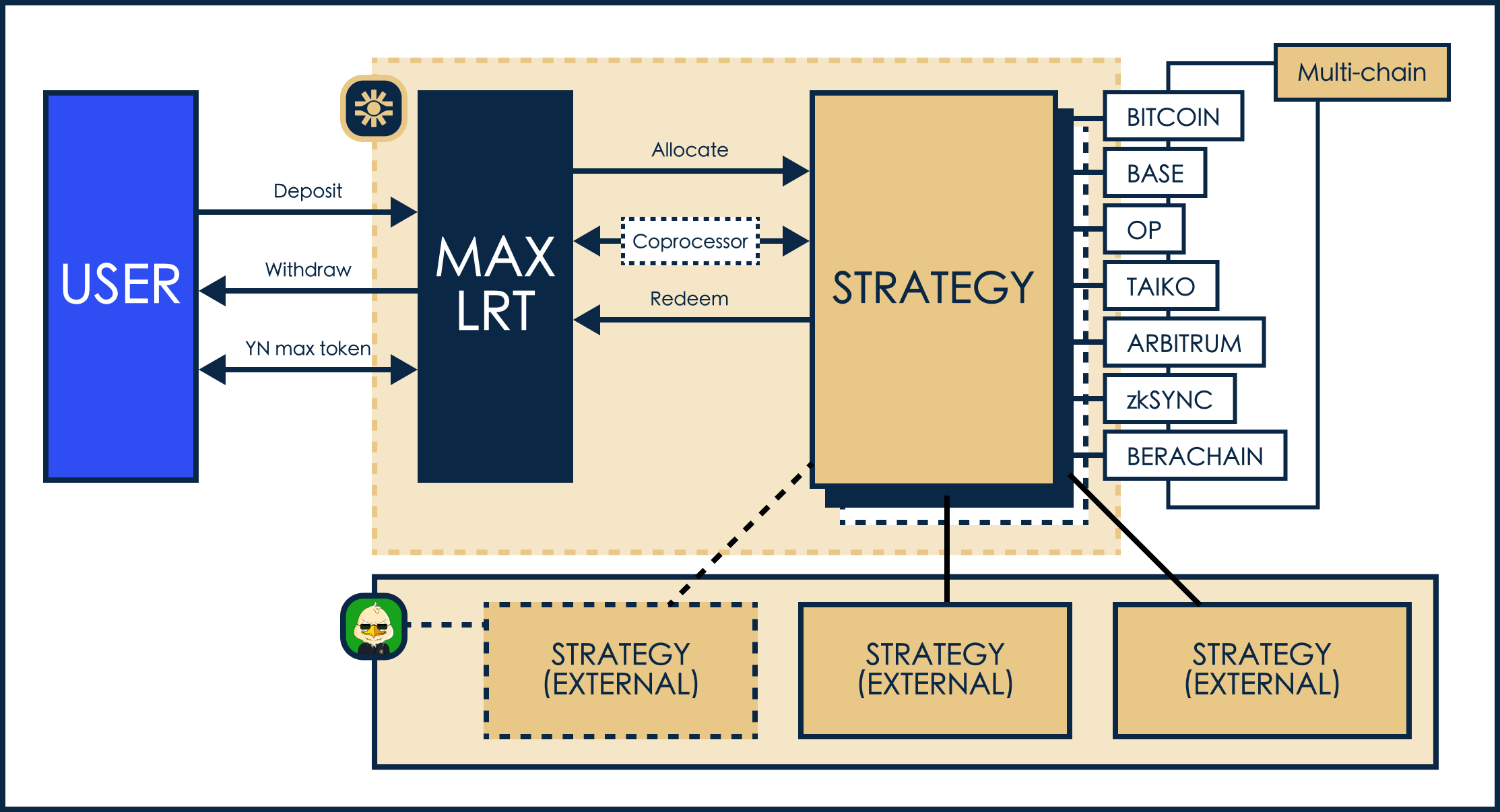
Regularly review the yield rates and risk profiles of the LRTs and AVSs you are using. Rebalance your positions to ensure you are capturing the best available incentives while managing exposure to any single protocol's smart contract risk.
While this layered approach can significantly boost returns, it also introduces complexity. Each additional layer adds potential points of failure, including smart contract vulnerabilities and slashing risks. It is essential to understand the underlying mechanics of each protocol before committing capital. The goal is to achieve sustainable, long-term growth rather than chasing short-term, high-risk yields that may not be viable in the evolving 2026 landscape.
Frequently asked questions about LRT yield
How does LRT yield work? LRTs stack two yield layers: base ETH staking rewards and EigenLayer restaking rewards from Active Verification Service (AVS) commissions. This mechanism allows your staked ETH to earn extra yield without losing liquidity. YieldNest outlines how these strategies execute specific optimization techniques.
What are the main risks? LRTs introduce layered complexity. You face smart contract risk from multiple protocols, slashing risk if validators misbehave, and liquidation risk if ETH prices drop. Gauntlet’s framework emphasizes that higher yields often correlate with increased protocol risk exposure.
Are LRTs safe? Safety depends on the specific protocol’s audit history and economic design. While LRTs offer superior yields, they are not risk-free. Always review the underlying smart contract audits and the economic incentives of the AVS providers before allocating capital.
No comments yet. Be the first to share your thoughts!