What LRT Yield Actually Means
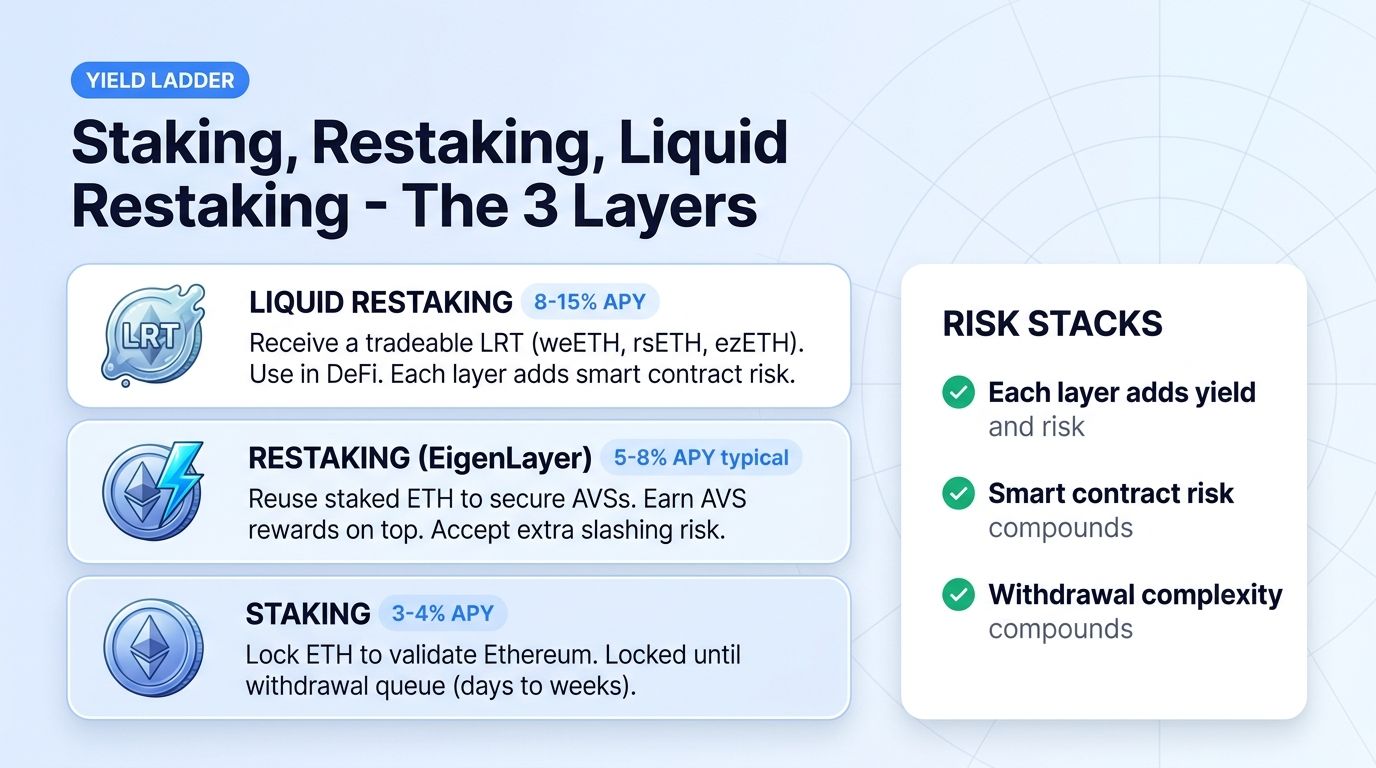
A Liquid Restaking Token (LRT) is a digital receipt for your restaked assets. Unlike standard staking, where you lock ETH and receive a token representing that position, an LRT allows you to extend the security of the base Ethereum network to other protocols, known as Actively Validated Services (AVSs). This process creates a multi-layer yield structure that goes beyond simple consensus rewards.
The "yield" in LRT comes from two distinct sources. First, you earn the base staking rewards from securing Ethereum itself. Second, by providing security to AVSs, you earn additional rewards. This dual-income mechanism is what drives the higher APYs often associated with LRTs compared to traditional liquid staking tokens.
Think of it like this: standard staking is renting out your apartment. Liquid restaking is renting out your apartment while also offering your building's security team to protect neighboring businesses. You get paid for the housing, and you get paid extra for the security services. LRTs capture both streams.
This structure makes LRTs powerful yield generators, but it also introduces complexity. The yield is not guaranteed; it depends on the performance and demand for the AVSs your LRT protocol supports. Understanding this dual mechanism is the first step in evaluating whether the risk is worth the potential reward.
Where the yield comes from
Liquid restaking tokens (LRTs) generate returns through two distinct layers. The first is the base yield from Ethereum staking. The second is the additional incentive from Actively Validated Services (AVS). Understanding how these layers interact explains why LRT yields often outperform standard staking, and why they carry different risks.
Base Ethereum staking rewards
The foundation of any LRT is the validator node on the Ethereum network. When you deposit ETH into an LRT protocol, the underlying infrastructure stakes that ETH to secure the blockchain. In return, the network pays the validator in ETH. This is the same yield you would earn by running your own validator or using a standard Liquid Staking Token (LST).
This base yield is relatively stable but modest, typically tracking the network's annual percentage yield (APY). It represents the fundamental cost of securing the Ethereum consensus layer. Without this layer, there is no asset to restake. It provides the baseline floor for the LRT's value.
Additional AVS incentives
The "restaking" component adds the second layer of yield. Protocols like EigenLayer allow staked ETH to be "reused" to secure other services, known as AVSs. These services might include oracle networks, sequencers, or bridge validators. Because these services need security, they pay operators for their participation.
This is where LRTs diverge from simple staking. The protocol delegates your staked ETH to these AVSs. The AVSs pay additional fees or token incentives to the operator. These incentives flow back to the LRT holder, boosting the total yield. This dual-revenue stream is the primary driver of LRT performance, but it introduces complexity and new risk vectors.
Why LRT yields are higher but more complex
The combination of base staking rewards and AVS incentives creates a higher total yield. However, this comes with increased complexity. The AVS layer is not guaranteed. If an AVS fails or is slashed for misbehavior, the staked ETH could be penalized. This risk is absent in simple staking.
Beyond this, the yield from AVSs can be volatile. Incentives may change based on demand for the service or token price fluctuations. This means LRT yields are not static. They depend on the health and performance of the broader restaking ecosystem. Investors must weigh the potential for higher returns against the risk of smart contract or slashing events.
Key infrastructure risks to watch
Liquid restaking tokens (LRTs) layer complexity atop an already intricate protocol stack. While the yield potential is attractive, the underlying infrastructure introduces specific technical and market vulnerabilities that can erode returns or trigger total loss. Understanding these risks is essential for protecting capital in a high-stakes environment.
Smart Contract and Nesting Risks
The primary danger in LRTs is smart contract risk, which multiplies with every layer of "nesting." When you restake an LRT, you are not just securing the base Ethereum network; you are often securing secondary protocols through intermediate layers. Each additional layer introduces new codebases, new validators, and new potential failure points. If a lower-level contract is exploited, the value of the higher-level LRT can collapse to zero, regardless of the underlying asset's performance. Gauntlet’s risk framework emphasizes that complexity is the enemy of security in this sector.
Slashing and Validator Misconduct
Slashing risk remains a constant threat. If the validators securing your position behave maliciously or suffer technical failures, Ethereum’s consensus layer can slash (penalize) a portion of the staked ETH. While many LRT protocols attempt to insure against this via insurance funds or reinsurance, these safety nets are not always sufficient. In extreme market conditions, the insurance fund itself may be depleted, leaving users exposed to the full brunt of the penalty. This risk is particularly acute for LRTs that rely on third-party operators with less transparent track records.
Liquidity Fragmentation
Liquidity fragmentation poses a significant market risk. As capital flows into various LRT protocols, it becomes dispersed across multiple tokens, each with its own liquidity pool and yield mechanism. This fragmentation can lead to unstable yields and increased slippage during market volatility. If a major LRT protocol fails, the resulting sell-off can impact the broader restaking ecosystem, causing a cascade of liquidity dry-ups. Investors must monitor the depth and stability of liquidity pools for their chosen LRTs to ensure they can exit positions without severe losses.

LRT Protocol Comparison
The liquid restaking landscape has fragmented into distinct players, each offering a different balance of yield and risk. Comparing top LRT protocols requires looking beyond headline APYs to understand where the yield actually comes from and what security assumptions underpin it.
The table below breaks down three leading protocols based on current Total Value Locked (TVL), yield composition, and primary risk factors. Data is sourced from DefiLlama to ensure accuracy regarding real-time market positioning DefiLlama.
| Protocol | TVL | Yield Source | Key Risk |
|---|---|---|---|
| EigenLayer | $12.5B | AVS fees + Slashing protection | Smart contract + Slashing |
| Ether.fi | $2.8B | ETH staking + eETH rewards | Liquid staking derivative |
| Karak | $450M | Restaking points + AVS | New protocol risk |
| Puffer Finance | $1.1B | ETH staking + PufETH yield | Oracle dependency |
When selecting a protocol, consider your tolerance for smart contract risk versus slashing risk. EigenLayer dominates TVL but introduces complex slashing conditions across multiple AVSs. Smaller protocols like Karak offer higher potential upside from early adoption but carry greater smart contract risk due to less battle-tested code. Always verify the specific AVSs you are supporting, as yield composition varies significantly by network.
Optimize Your LRT Strategy
Building a resilient LRT portfolio requires balancing yield potential against the complex risk layers inherent in restaking. Rather than chasing the highest APY, focus on constructing a diversified structure that can withstand protocol failures and market volatility.
Avoid concentrating your position in a single LRT protocol. Spread your capital across multiple providers to mitigate smart contract risk and ensure that a failure in one layer does not wipe out your entire stake. This diversification acts as a buffer against idiosyncratic protocol risks.

Scrutinize the sources of yield. Gauntlet’s market risk framework emphasizes that sustainable returns come from real economic activity, not inflated token emissions. Prioritize protocols with transparent revenue models and clear explanations of how AVS (Actively Validated Services) rewards are distributed.

LRTs are heavily correlated with ETH price movements. Use a TechnicalChart to monitor ETH trends and adjust your allocation accordingly. If ETH is volatile, consider reducing leverage or hedging with stablecoins to protect your principal while still earning restaking rewards.
A disciplined approach to LRT allocation means treating yield as a bonus, not a guarantee. By verifying protocol security and maintaining a balanced portfolio, you can manage the risks of liquid restaking more effectively.
Common questions about LRT yield
Liquid restaking tokens (LRTs) are digital receipts representing restaked positions. They allow you to extend the security of your base network stake to other protocols while maintaining liquidity. This multi-layer structure combines base staking rewards with additional yields from actively validated services.
Liquid staking tokens (LSTs) let you earn staking yields without locking up assets. LRTs build on this by restaking those LSTs, creating a nested yield opportunity. Think of it as earning interest on your interest, though with higher complexity and risk.
No comments yet. Be the first to share your thoughts!