
What liquid restaking actually does
Liquid Restaking Tokens (LRTs) are digital receipts for restaked ETH. When you restake, you lock your Ethereum to secure the base network while extending that same security to other protocols. The LRT is the token you hold in your wallet to prove you have done this. It represents your position in the liquid restaking protocol.
Think of an LRT like a ticket at a high-end club. You hand over your ID (your staked ETH) to get in, but you keep the ticket (the LRT) in your hand. You can still show the ticket to friends, trade it, or use it as collateral elsewhere, even though the underlying entry (your security deposit) is locked up providing access to the club.
This mechanism allows your ETH to work harder. Instead of just securing Ethereum, your stake helps secure secondary networks like Solana, Aptos, or various data availability layers. You earn yield from the base staking rewards plus additional rewards from the protocols you are securing. The LRT ensures you don't have to wait for your ETH to unlock to participate in these opportunities.
However, this complexity introduces new risks. You are not just relying on Ethereum's security; you are also relying on the smart contracts of the LRT protocol and the validity of the secondary networks. If a validator acts maliciously on a secondary network, your restaked ETH could be slashed. The LRT is not a passive holding; it is an active security provider with active risk exposure.
Top LRT protocols compared
Choosing a liquid restaking token protocol isn't just about chasing the highest APY; it's about understanding where that yield actually comes from. Some protocols generate yield through native restaking rewards, while others rely heavily on points programs or governance incentives that may not translate to immediate token value. Understanding these mechanics is essential for managing risk in a high-stakes environment.
Below is a side-by-side comparison of the leading LRT protocols, focusing on their primary value propositions, supported chains, and unique features. This data is based on current protocol structures and should be verified before committing capital.
| Protocol | Primary Yield Source | Supported Chains | Key Feature |
|---|---|---|---|
| EtherFi | Native ETH Restaking | Ethereum | EigenLayer integration with liquid staking derivative |
| Renzo | Restaking + Points | Ethereum, Base, Arbitrum | Automated strategy rebalancing across EigenLayer AVSs |
| Puffer | Native Yield + Insurance | Ethereum | Smart validator infrastructure with withdrawal insurance |
| Kelp DAO | Restaking Rewards | Ethereum, Arbitrum | RSETH (restaked ETH) with diversified AVS exposure |
| Swell | Liquid Staking + Restaking | Ethereum, Solana | SwETH with native staking yield plus restaking layers |
The table above highlights the diversity in how these protocols structure their returns. For instance, while EtherFi focuses on deep EigenLayer integration, Renzo offers multi-chain support and automated strategy management. Puffer differentiates itself with insurance mechanisms for validators, and Kelp DAO provides diversified exposure across various Actively Validated Services (AVSs).
When evaluating these options, consider not just the headline APY but the sustainability of the yield source. Protocols relying heavily on points or temporary incentives may see their token prices adjust once those programs wind down. Always review the official documentation and whitepapers for each protocol to understand the underlying mechanics and risks involved.


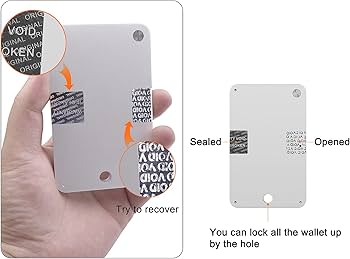
As an Amazon Associate, we may earn from qualifying purchases.
Securing your LRTs is just as important as choosing the right protocol. Hardware wallets provide an additional layer of security by keeping your private keys offline, protecting your assets from online threats. Consider investing in a reputable hardware wallet to safeguard your investments in the LRT ecosystem.
Key risks in the LRT market
Liquid restaking tokens offer high yields, but they also introduce a complex web of risks that can erode returns or lead to total loss. Understanding these risks is essential before allocating capital. The Gauntlet research framework identifies four primary risk attributes: smart contract risk, liquidity fragmentation, withdrawal queue delays, and slashing risk. While slashing is often the most discussed, the other three are equally critical for long-term sustainability.
Smart contract risk is inherent to any DeFi protocol. LRTs rely on multiple layers of code: the underlying staking contract, the LRT bridge, and the yield-generating strategy. Each layer adds potential attack vectors. A vulnerability in any single contract can compromise the entire system. For example, a bug in the LRT’s yield distribution logic could allow an attacker to drain funds. Always audit the smart contracts involved and prioritize protocols with extensive, third-party security reviews.
Liquidity fragmentation occurs when LRTs are not easily convertible back to the base asset. This can happen if the LRT’s liquidity pools are thin or if the protocol imposes restrictions on redemptions. In a market downturn, fragmented liquidity can lead to significant slippage or an inability to exit positions. This risk is particularly acute for newer LRT protocols that have not yet established deep liquidity across major exchanges.
Withdrawal queue delays are another major concern. During periods of high network congestion or mass redemptions, LRT protocols may implement queues to manage outflows. These delays can lock up your capital for days or even weeks, preventing you from reacting to market changes. Gauntlet’s framework highlights that protocols with transparent, efficient withdrawal mechanisms are generally safer. Always check the historical performance of a protocol’s withdrawal queues before investing.
Tracking tools for LRT performance
You can’t manage what you don’t measure. Liquid restaking involves complex, layered yields that shift daily based on Ethereum base rewards, EigenLayer points, and protocol-specific incentives. Relying on a single dashboard is a mistake; you need a stack that separates base staking APY from extra incentives.
Start with EigenPhi. It is the industry standard for tracking restaking metrics across multiple protocols. It shows you exactly where your points are accumulating and which protocols are offering the highest current incentives. Without this, you are flying blind on airdrop potential.
Pair this with DeFi Llama for a high-level view of your total value locked (TVL) and overall yield across all your positions. It helps you spot if one protocol’s yield is artificially inflated or dropping unexpectedly. For real-time transaction monitoring and gas optimization, use Revert Finance. It lets you see the actual cost of your interactions, ensuring your yield isn’t eaten by fees.
Finally, use Dune Analytics for deep dives into specific protocol health. Search for dashboards by trusted creators like "@dune" or protocol teams to see on-chain data that isn’t reflected in simple APY numbers. This helps you verify if a protocol’s yield is sustainable or if it’s just printing tokens to attract liquidity.
Building a sustainable LRT strategy
Constructing a portfolio around Liquid Restaking Tokens requires balancing yield potential against the complex risk layers unique to restaking. Unlike standard staking, LRTs introduce smart contract risk, oracle risk, and slashing risk from the underlying restaked assets. A sustainable strategy prioritizes protocol robustness over headline yields, ensuring that your capital remains secure even during market volatility.
1. Evaluate protocol risk frameworks
Before allocating capital, understand the specific risk attributes of the LRT protocol. Gauntlet’s LRT Market Risk Framework outlines four main risk attributes: smart contract risk, oracle risk, slashing risk, and market risk. Prioritize protocols that have undergone rigorous audits and have transparent risk management processes. Look for protocols that explicitly address these risks in their documentation, rather than relying on marketing claims.
2. Diversify across multiple LRTs
Avoid concentrating your position in a single LRT protocol. Diversification mitigates the risk of a single point of failure, such as a smart contract exploit or a governance attack. Spread your exposure across different LRT providers, each with distinct risk profiles and underlying asset allocations. This approach ensures that a failure in one protocol does not wipe out your entire restaking position.
3. Monitor restaking incentives and yields
Restaking incentives can fluctuate significantly based on network demand and protocol emissions. Monitor these incentives regularly to ensure that your yield remains attractive relative to the risk. Be cautious of protocols offering unusually high yields, as they may be unsustainable or indicative of higher underlying risks. Use official sources and protocol dashboards to track real-time yield data.
4. Assess smart contract security
Smart contract risk is the most immediate threat to LRT investments. Review audit reports from reputable firms and check for any known vulnerabilities or past exploits. Prefer protocols with bug bounty programs and active security teams. Consider using multi-signature wallets or hardware wallets to store your LRTs, adding an extra layer of security against unauthorized transactions.
5. Plan for exit strategies
Liquidity can dry up during market stress, making it difficult to exit positions quickly. Ensure that the LRTs you hold have sufficient liquidity on decentralized exchanges or within the protocol itself. Have a clear exit strategy in place, including predefined price targets or risk triggers. Regularly review your portfolio allocation and adjust as needed to maintain your desired risk-reward profile.
Frequently asked questions about LRTs
Liquid Restaking Tokens are often misunderstood as simple staking derivatives. They are actually distinct instruments that layer security and yield in ways standard staking cannot. Below are the most common questions users ask before allocating capital to protocols like Ether.fi or Renzo.
No comments yet. Be the first to share your thoughts!