Lrt yield analysis limits to account for
Liquid restaking tokens (LRTs) offer layered yields by combining base staking rewards with additional returns from integrated protocols. However, this structure introduces complexity that can erode net returns. Unlike simple liquid staking tokens (LSTs), which yield only base network rewards, LRTs layer restaking rewards on top. This creates higher gross yields but also higher operational costs and smart contract risks.
The primary constraint in LRT yield analysis is the cost of strategy execution. Yield strategies are building blocks that execute specific optimization techniques, but not all are directly accessible to users. Each layer of restaking adds fees, slippage, and potential depegging risks. Investors must weigh the marginal yield gain against these hidden costs.
| Feature | LST | LRT |
|---|---|---|
| Yield Source | Base staking rewards | Base staking + restaking rewards |
| Complexity | Low | High |
| Risk Profile | Moderate | Elevated |
| Liquidity | High | Variable |
When analyzing LRT yields, focus on the net effective yield after fees. A high gross yield often masks high operational costs. For most investors, the decision comes down to risk tolerance and yield expectations. If you seek simplicity, an LST may be sufficient. If you can manage complexity, an LRT offers higher potential returns.
Lrt yield analysis choices that change the plan
Choosing between liquid staking and liquid restaking requires evaluating how much yield you need versus how much risk you can absorb. Liquid Staking Tokens (LSTs) offer a single revenue stream from the base network, while Liquid Restaking Tokens (LRTs) layer additional rewards from Actively Validated Services (AVSs) on top of that foundation.
The tradeoff is structural. LRTs compound yield by participating in multiple security protocols simultaneously, but this complexity introduces smart contract risk and potential slashing events across integrated layers. LSTs provide simpler, more predictable returns with lower technical overhead. Your decision should hinge on your tolerance for protocol-level variance and your desire for maximum yield efficiency.
| Feature | LST | LRT |
|---|---|---|
| Primary Yield Source | Base network staking | Base + AVS rewards |
| Complexity | Low | High |
| Slashing Risk | Single layer | Multi-layer exposure |
| Flexibility | Standard DeFi usage | Advanced yield strategies |
When analyzing LRT yield, consider that the additional returns often come from points programs and secondary protocol incentives rather than pure economic security. These rewards can be volatile and may fluctuate based on AVS demand. If you prioritize capital preservation and ease of use, an LST is the safer baseline. If you are comfortable managing multi-protocol exposure for higher potential returns, an LRT strategy offers superior yield aggregation.
How to choose an LRT strategy
Liquid restaking tokens (LRTs) layer additional yield on top of base staking rewards by delegating security to Active Validator Services (AVSs). The choice between strategies depends on your tolerance for smart contract risk and your desire for passive income versus active management.
LRT strategies vary in complexity. Simple LRTs offer higher yields than standard LSTs but introduce smart contract risk from the restaking protocol. Complex strategies may involve leverage or multiple protocol integrations, amplifying both potential returns and exposure to liquidation or slashing events.
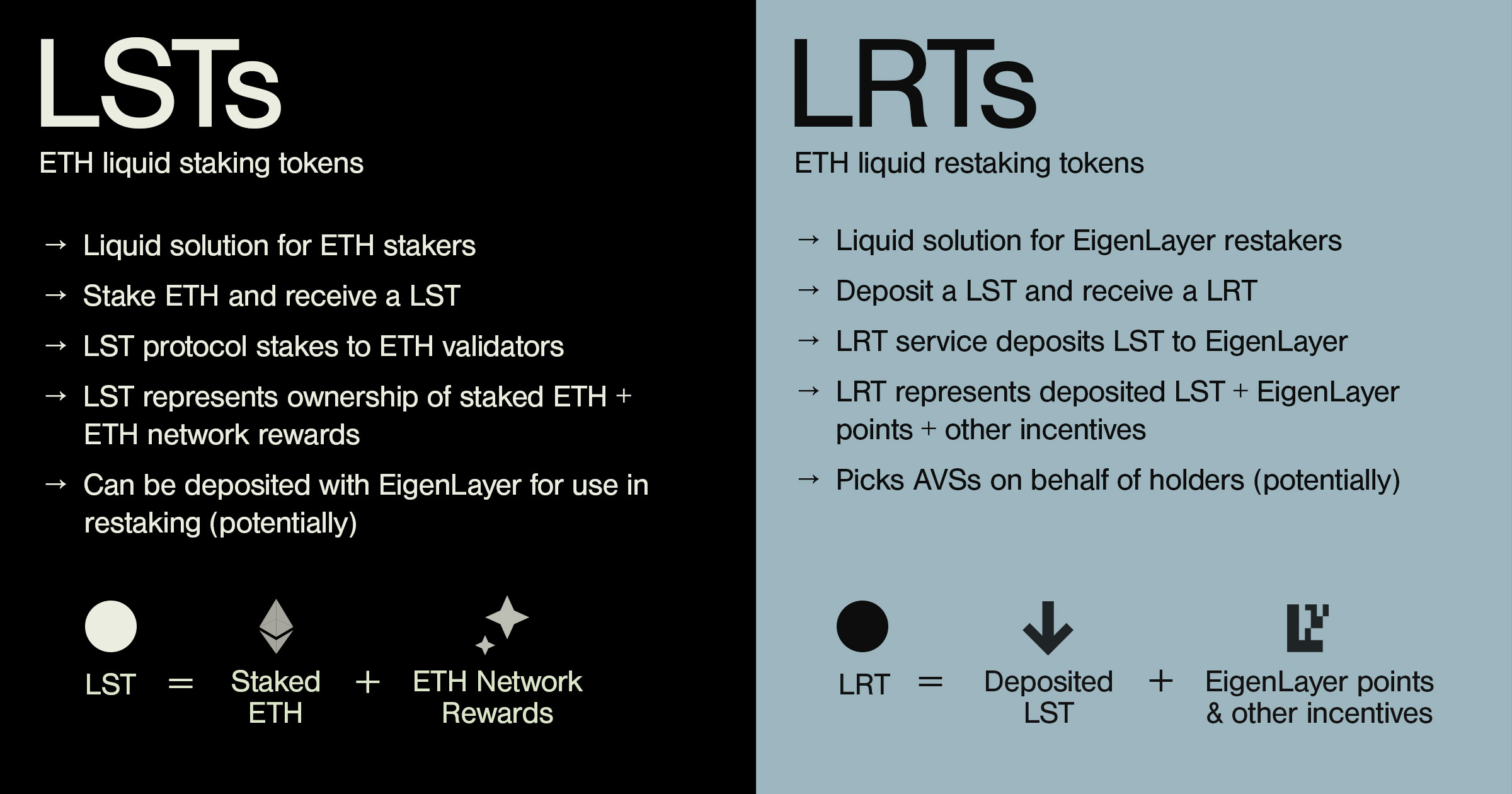
Understand that an LST yields base network staking rewards, while an LRT yields those plus additional rewards from integrated protocols. Review the specific AVSs each LRT protocol supports to gauge the sustainability of the extra yield and the security assumptions required.
Prioritize protocols with audited code and a track record of stable operations. Check if the LRT strategy is directly accessible to users or if it requires interacting with a vault. Direct access often means more control but also more responsibility for managing your position.
Ensure the LRT token has sufficient liquidity on decentralized exchanges for easy exit. Some strategies may have lock-up periods or fees for early withdrawal. Verify that you can unwrap the LRT back to the underlying asset without significant slippage or cost.
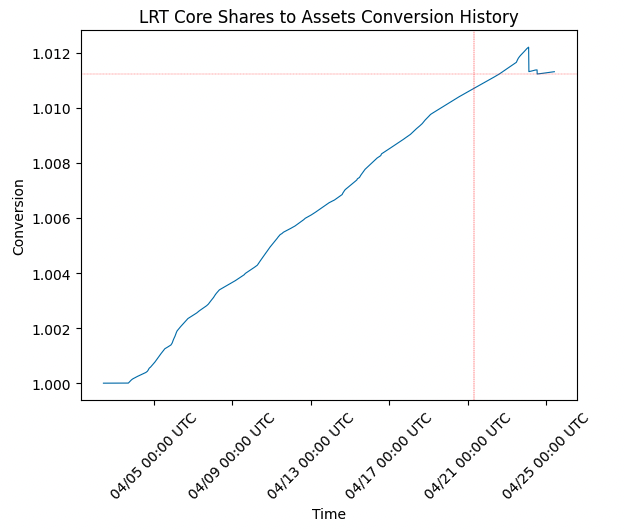
Restaking introduces the risk of slashing if the underlying validators misbehave. Review the protocol's insurance fund or slashing protection mechanisms. Understand how slashing events would impact your yield and principal, and whether the protocol has a history of covering such losses.
Watch Out for Weak Options and Misleading Claims
Liquid restaking promises higher yields, but the math often hides significant risks. Many platforms market "yield" without clarifying that a large portion comes from volatile points or subsidies that may vanish. Before committing capital, you need to distinguish between sustainable protocol revenue and temporary incentives.
The Yield Illusion
Not all yield is created equal. A common mistake is comparing an LRT's total APY against a simple staking rate without accounting for the additional layers of risk. An LST yields the base network's staking rewards. An LRT yields those plus additional rewards from each integrated protocol (the AVSs). However, these extra rewards are often tied to token emissions that depreciate in value. If the underlying token price drops faster than the yield accrues, your real return is negative.
Hidden Risks in "Safe" Protocols
Some protocols claim zero risk by insuring against smart contract failures. This insurance is rarely free; it is baked into the yield calculation. If a protocol relies on a single AVS for most of its reward, it is not diversified—it is concentrated. A failure in that specific AVS can drain the entire pool. Always check which AVSs the protocol integrates with and whether the yield is derived from multiple independent sources or just one.
Decision Checklist
- Verify Yield Source: Is the yield from real protocol revenue or token emissions?
- Check AVS Diversity: Does the protocol rely on one or many AVSs?
- Understand the Lock-up: Can you exit quickly if the market turns?
If you cannot answer these questions with clear data, the option is likely weak. Stick to protocols with transparent, audited yield sources and diversified AVS integrations.
LRT Yield Analysis FAQs
These questions address the core mechanics and distinctions between liquid staking and restaking, helping you evaluate where your capital fits in the current yield landscape.
No comments yet. Be the first to share your thoughts!