LRT yield strategy limits to account for
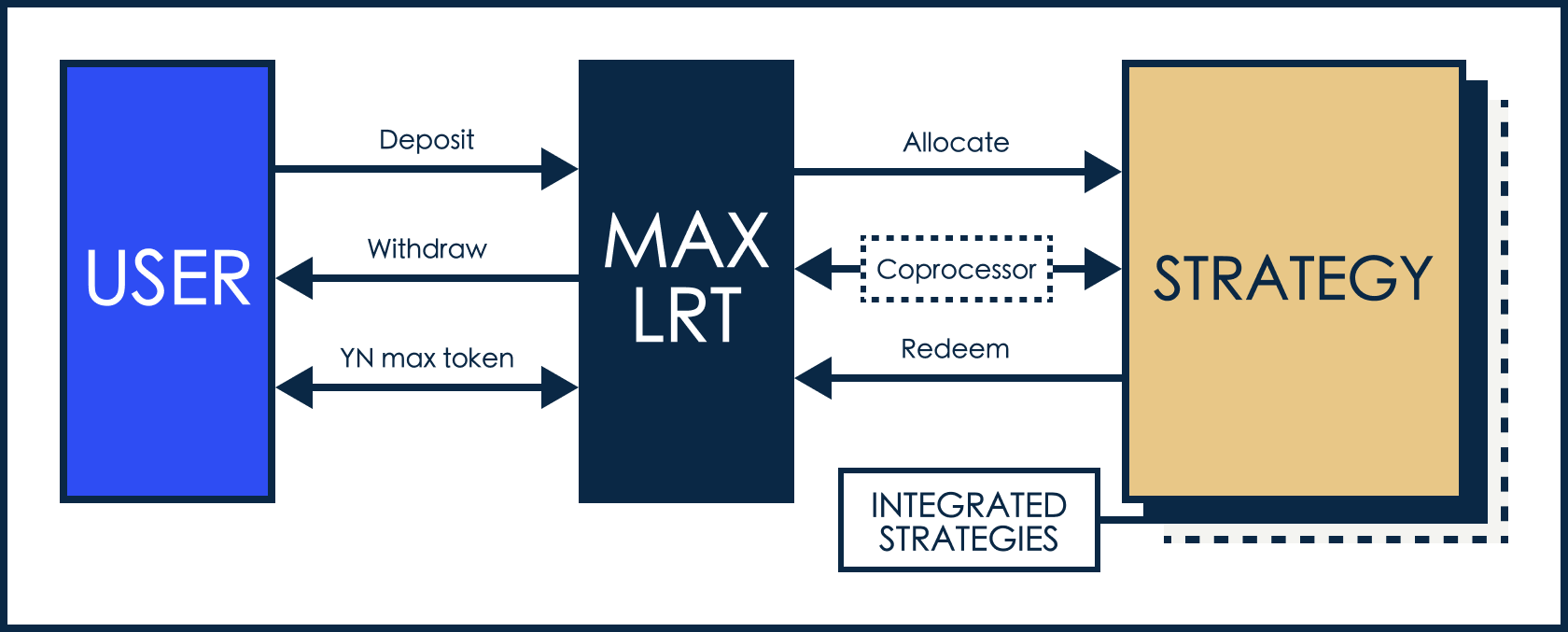
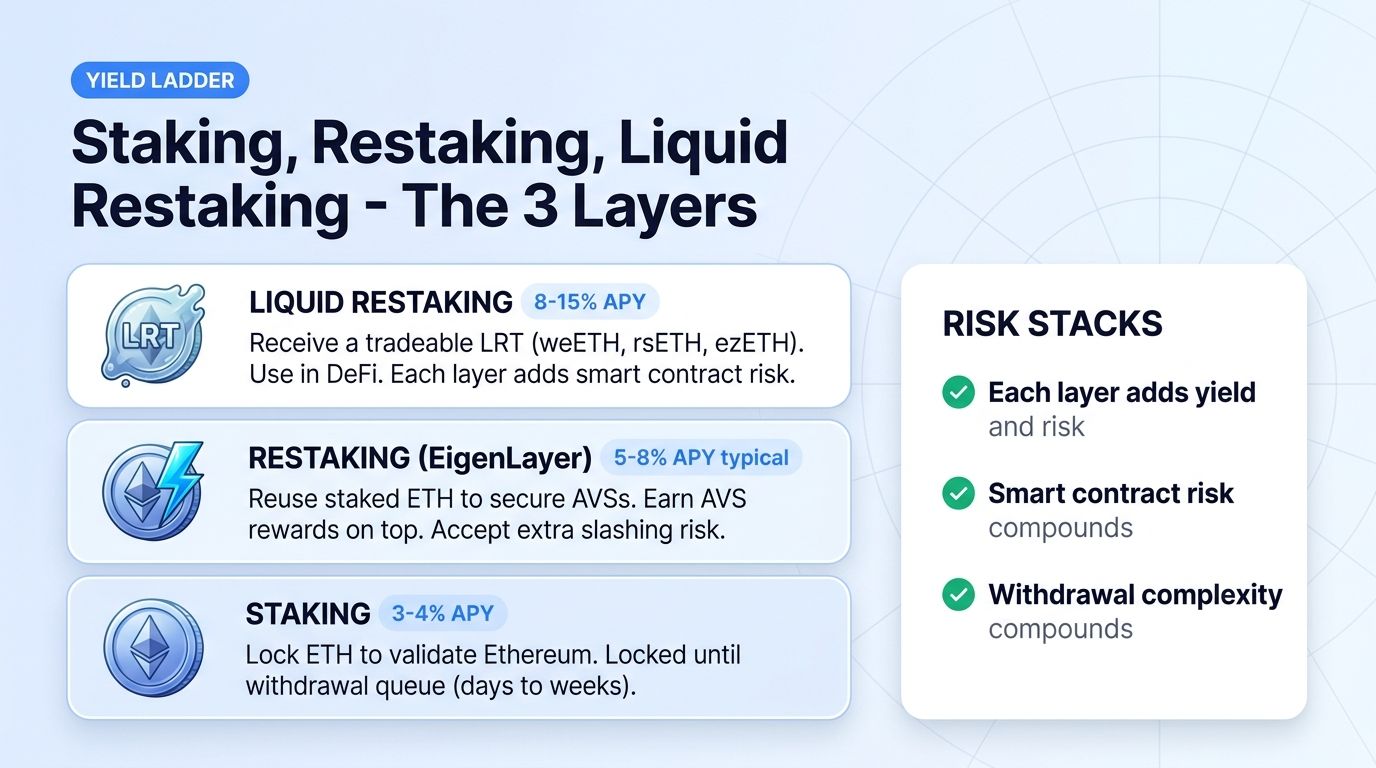
An LRT (Liquid Restaking Token) yield strategy relies on stacking rewards from multiple protocols. An LRT yields those plus additional rewards from each integrated protocol (the AVSs). In theory, restakers can “stack” rewards from multiple sources, creating a composite APY that looks attractive on paper.
However, this stacking introduces significant infrastructure risks. The yield is not guaranteed; it depends on the uptime and solvency of every layer in the stack. If one AVS underperforms or suffers a slashing event, the entire LRT’s yield profile can degrade instantly. This is not a passive income stream you can ignore—it requires active monitoring of the underlying vaults and operators.
The constraint is clear: higher yield comes with higher complexity. You are trading simplicity for potential returns, but the margin for error shrinks with each added layer. Before committing capital, verify the audit status of each protocol in the stack and understand the withdrawal queues. If you cannot explain how the yield is generated, you are not earning yield; you are taking on unpriced risk.
Lrt yield strategy choices that change the plan
Liquid restaking tokens (LRTs) promise stacked yield, but the mechanics introduce distinct risk vectors that vary by protocol. When evaluating an LRT strategy, you must weigh the source of the yield against the complexity of the underlying infrastructure. The "enhanced yield" often cited in these strategies is not free money; it is compensation for exposure to smart contract risk, slashing conditions, and network congestion.
To make an informed decision, compare the structural differences between major LRT providers. The table below breaks down the core tradeoffs across liquidity, yield composition, and risk exposure.
| Protocol | Yield Source | Liquidity | Risk Profile |
|---|---|---|---|
| EigenLayer (EIGEN) | AVS Fees + Restaking | High | High (Slashing) |
| Renzo (ezETH) | Staking + Points | Medium | Medium (Smart Contract) |
| Puffer (pufETH) | Staking + Insurance | High | Low (Insurance Fund) |
| Karak (KARA) | Restaking Aggregation | Low (Early Stage) | High (Complexity) |
Liquidity and Exit Friction
High liquidity is essential for managing downside risk. Protocols like Puffer and EigenLayer offer deeper liquidity pools, allowing you to exit positions with minimal slippage. In contrast, newer aggregators like Karak may offer higher theoretical yields but suffer from lower liquidity, making it difficult to exit large positions quickly during market stress. Always check the total value locked (TVL) and daily volume before committing capital.
Yield Composition and Sustainability
Not all yield is created equal. Some LRTs derive yield primarily from staking rewards, which are relatively stable. Others rely heavily on "points" or airdrop farming, which are speculative and can vanish overnight. For example, Renzo’s ezETH combines staking rewards with points, creating a hybrid model that is volatile. Evaluate whether the yield is sustainable or if it is artificially inflated by temporary incentives.
Risk Exposure and Smart Contract Complexity
The more protocols you interact with, the higher the attack surface. Restaking involves interacting with multiple Actively Validated Services (AVSs), each with its own smart contract risks. Slashing events can result in the loss of principal, not just yield. Ensure you understand the slashing conditions and insurance mechanisms in place. Protocols with insurance funds, like Puffer, offer a layer of protection that pure restaking protocols lack.
Choose the right tool for your LRT yield strategy
Building a yield strategy isn't about chasing the highest APR; it's about matching your risk tolerance to the right infrastructure. Liquid Restaking Tokens (LRTs) offer stacked yields from staking and restaking, but they come with smart contract and slashing risks that vary by protocol.
To navigate this, you need a decision framework that prioritizes security and transparency. Below is a practical guide to selecting the right tools, followed by a curated list of resources to help you manage and monitor your positions.
Start by defining your comfort level with smart contract risk. LRTs like Ether.fi or Renzo offer higher yields by restaking on multiple Active Validator Services (AVSs), but this increases exposure to potential slashing events. If you prefer stability, stick to single-layer LSTs. If you seek enhanced yield, understand that you are trading security for returns.
Never skip the audit phase. Look for protocols that have undergone rigorous audits by firms like OpenZeppelin or Trail of Bits. Check if the protocol has a bug bounty program and how they handle historical exploits. Transparency in code and incident response is a stronger indicator of safety than marketing claims.
Distinguish between "real" yield (from actual network activity) and inflationary yield (from token emissions). Sustainable yields come from genuine demand for restaking services. Use tools to track the composition of your yield; if more than 50% comes from native token emissions, the yield may be volatile and prone to depreciation.
Use on-chain analytics to track your positions. Tools like DeFi Llama or protocol-specific dashboards provide real-time data on TVL, APR trends, and validator performance. Regular monitoring allows you to rebalance before market conditions shift, ensuring your strategy remains aligned with your goals.



As an Amazon Associate, we may earn from qualifying purchases.
Watch for Weak LRT Yield Options
Not all Liquid Restaking Token (LRT) strategies deliver the returns they promise. Many protocols rely on LRT yield that is either unsustainable or hidden behind complex, opaque mechanisms. When evaluating a strategy, you must look past the headline APY and examine the underlying infrastructure risks and real yield sources.
The Infrastructure Risk
Restaking protocols require validators to stake ETH while also securing other networks (AVSs). This doubles the exposure to slashing events. If a validator misbehaves on an AVS, the entire staked ETH can be penalized. Many LRT projects do not fully disclose their slashing insurance funds or the technical robustness of their validator sets. This is a critical vulnerability that can wipe out principal, not just yield.
Real Yield vs. Inflationary Tokens
A common mistake is confusing token emissions with real yield. Some LRTs pay out in their own native tokens, which depreciate in value as supply increases. Real yield comes from actual fees, staking rewards, or restaking incentives paid in ETH or stablecoins. If the yield is primarily token-based, it is likely inflationary and unsustainable long-term. Always check the composition of the rewards.
Tooling for Verification
Use dedicated LRT yield aggregators like LRT Yield Layer to consolidate and compare strategies. These tools allow you to see the vector of yield sources and 1-click access to diversified strategies. This helps you avoid single-point failures and identify which protocols are actually generating fee-based income versus just printing tokens. Always cross-reference these claims with official documentation from the underlying restaking protocols.
Lrt yield strategy: what to check next
Before committing capital to liquid restaking, it helps to separate the marketing hype from the actual mechanics. The following answers address the most common technical and risk-related objections readers have when evaluating these strategies in 2026.
No comments yet. Be the first to share your thoughts!