Budget fit: LRT yield choices that change the plan
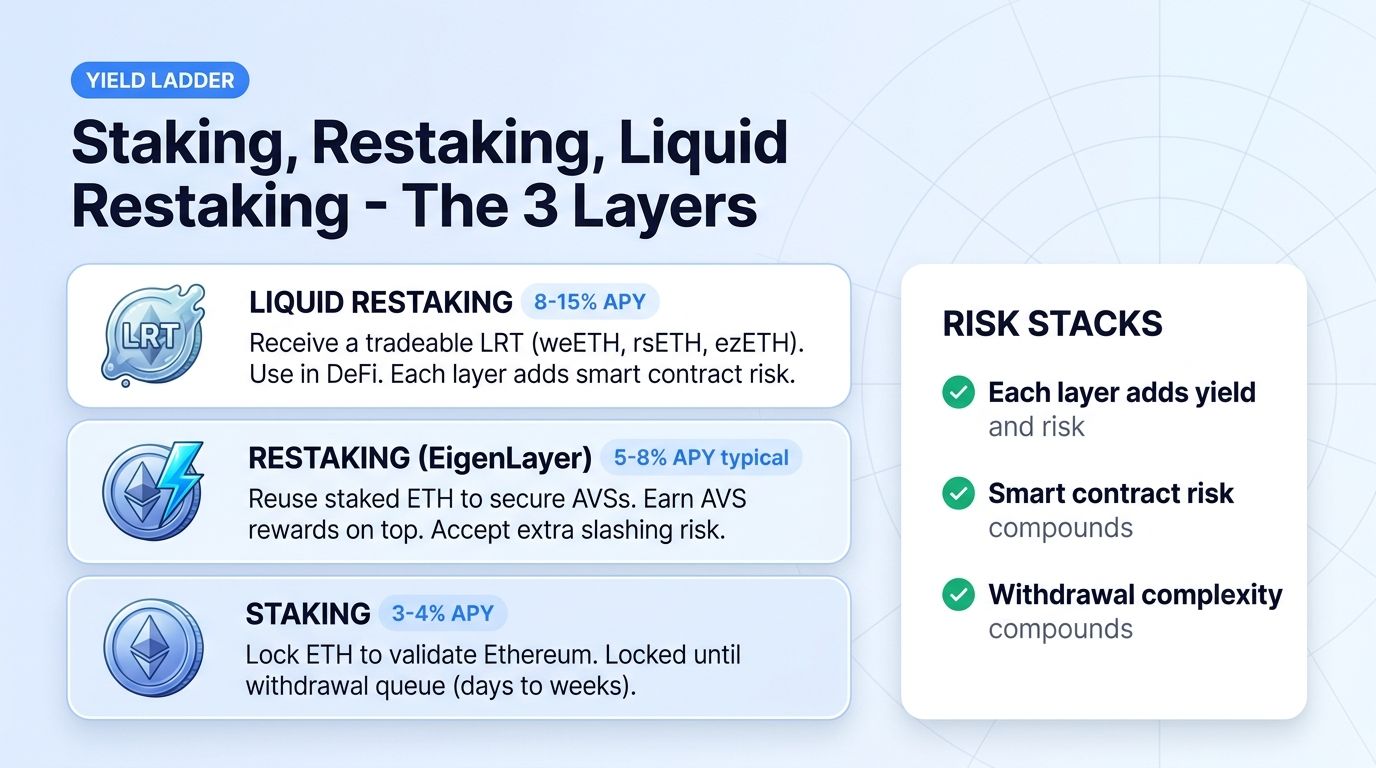
Liquid restaking tokens (LRTs) offer yield that looks impressive on paper but carries hidden infrastructure risks. Unlike native staking, LRTs layer additional smart contract complexity and third-party slashing conditions on top of Ethereum’s base yield. This structure can amplify returns, but it also introduces points of failure that can erode principal.
When evaluating LRTs for your budget, prioritize protocol maturity over headline APY. Established tokens like rsETH and eETH have undergone more rigorous audits and have larger total value locked (TVL) pools, which often correlates with better resilience during market stress. Newer entrants may offer higher yields to attract capital, but they frequently lack the historical data needed to assess long-term viability.
The core tradeoff is between yield and security. Higher yields often come from leveraging restaked assets or participating in riskier validator sets. Always check the risk framework provided by the protocol. Gauntlet’s LRT market risk framework highlights four key attributes: slashing risk, smart contract risk, liquidity risk, and composability risk. Understanding these helps you avoid protocols that might offer high yields but could fail under pressure.


As an Amazon Associate, we may earn from qualifying purchases.
Compare top LRT yield strategies
Liquid restaking tokens (LRTs) offer boosted yields by restaking ETH, but they introduce distinct risk profiles. Choosing the right approach depends on your tolerance for smart contract complexity and liquidity constraints. The following comparison outlines the strongest options for 2026, focusing on yield mechanics and risk factors rather than speculative price targets.
EigenLayer-native LRTs (e.g., rsETH, eETH)
These tokens are the most direct entry into the LRT market. They allow you to restake ETH while maintaining liquidity. The primary benefit is simple exposure to EigenLayer rewards. However, this comes with higher smart contract risk, as you are interacting with multiple layers of abstraction. Liquidity is generally deep, but yield can fluctuate with EigenLayer demand.
Hybrid LRT Protocols (e.g., Puffer, Renzo)
Hybrid protocols often use automated strategies to optimize yield across multiple restaking layers. They may include insurance funds or hedging mechanisms to mitigate slashing risks. This complexity can lead to more stable yields during market volatility. The tradeoff is a more complex codebase to audit and potentially lower raw yield due to optimization costs.
LRT-based Yield Farming (e.g., ZeroLend strategies)
Using LRTs as collateral in lending markets like ZeroLend can boost returns further. This strategy involves borrowing against your LRT to buy more, or providing liquidity. It offers the highest potential yield but introduces liquidation risk. This approach is best for experienced users who can actively manage their positions and monitor health factors.
Comparison Table: LRT Yield Options
| Strategy | Yield Source | Risk Level | Liquidity | Best For |
|---|---|---|---|---|
| Native LRTs | EigenLayer rewards | Medium | High | Passive exposure |
| Hybrid Protocols | Optimized restaking | Medium-High | High | Yield stability |
| LRT Farming | Leveraged yields | High | Variable | Active management |
| Strategy | Yield Source | Risk Level | Liquidity | Best For |
|---|---|---|---|---|
| Native LRTs | EigenLayer rewards | Medium | High | Passive exposure |
| Hybrid Protocols | Optimized restaking | Medium-High | High | Yield stability |
| LRT Farming | Leveraged yields | High | Variable | Active management |
Inspect the expensive parts
Liquid restaking protocols offer high yields, but they also bundle multiple layers of smart contract risk. When a protocol fails, the cost is not just lost yield—it is the permanent loss of principal staked ETH. Gauntlet’s risk framework identifies four main attributes to evaluate, but in practice, three failure points drain wallets fastest: slashing, smart contract bugs, and liquidity mismatches.
Use this checklist to audit the expensive risks before allocating capital.
Verify if the LRT provider maintains a slashing insurance fund or uses a decentralized operator set. Single-operator models concentrate risk; if that operator gets slashed, your staked ETH is permanently frozen or burned. Look for protocols that explicitly disclose their slashing coverage limits.
Review the audit history of the underlying LRT contracts. Have they been audited by top-tier firms like OpenZeppelin or Trail of Bits? More importantly, has the protocol undergone a formal verification or a bug bounty program? Unaudited code is the single highest probability vector for total loss.
Check the depth of the liquidity pools where you can redeem your LRT tokens. During market stress, liquidity can vanish instantly, forcing you to sell at a steep discount. Ensure there is sufficient depth on major decentralized exchanges to exit your position without significant slippage.
Verify operator reliability
The yield in liquid restaking comes from restaking ETH on networks like EigenLayer. This means your ETH is delegated to operators who run infrastructure. If these operators fail to perform their duties, you face slashing. Prioritize protocols that use diversified operator sets rather than single points of failure.
Monitor protocol health
Regularly check the health metrics of the LRT protocol. Look for signs of centralization, such as a single entity controlling a large portion of the staked assets. High centralization increases the risk of coordinated attacks or mismanagement. Use dashboards from official sources to track these metrics in real-time.
Ownership costs that eat your yield
The headline APY on a liquid restaking token often looks generous, but it rarely reflects what lands in your wallet. Before you commit capital, you need to account for the friction costs that erode returns over time. These expenses fall into three buckets: protocol fees, validator commissions, and the hidden cost of gas.
Protocol and validator fees
Most LRT protocols charge a performance fee on the rewards generated. This is standard, but the rate varies significantly between platforms. For example, some protocols take 10-15% of the yield, while others may charge more for advanced features like auto-compounding or insurance pools. Additionally, the underlying validators you delegate to often take a commission from the staking rewards. If you are using a liquid restaking protocol that distributes rewards to multiple validators, each validator’s commission stacks up. Always check the total fee structure: protocol fee + validator commission = your net yield drag.
Gas and transaction costs
Every interaction with an LRT protocol costs gas. Depositing ETH, claiming rewards, and withdrawing your position all require on-chain transactions. In periods of high network congestion, these fees can be substantial. If you are earning a modest yield but paying high gas fees to manage your position, your net return could turn negative. Consider how often you plan to rebalance or claim rewards. Frequent trading or rebalancing will amplify these costs, making low-yield strategies less viable.
The "cheap buy" trap
A common mistake is choosing an LRT based solely on its entry price or initial yield projection. However, the true cost of ownership is determined by the total fee burden and gas efficiency over the holding period. A protocol with a slightly lower headline yield but lower fees and better gas optimization might outperform a high-yield, high-fee competitor. Always calculate the net annualized return after all fees and estimated gas costs before deciding.


As an Amazon Associate, we may earn from qualifying purchases.
LRT yield: what to check next
Liquid restaking tokens offer higher yields than standard ETH staking, but they introduce new layers of complexity and risk. Before allocating capital, it is essential to understand the mechanics behind the returns and the potential downsides.
What is an LRT?
An LRT represents your restaked position. Think of it as a digital receipt that shows your assets are being used in a liquid restaking protocol like EigenLayer. Unlike standard staking, where your ETH is locked, an LRT remains liquid, allowing you to use it in other DeFi applications while earning restaking rewards [src-5].
How does LRT yield work?
LRT yields come from two sources: standard Ethereum staking rewards and additional rewards from restaking protocols. When you stake ETH, you earn base rewards. When you restake via an LRT, you provide security to other networks, earning extra yield on top [src-2]. This dual-income stream is what drives the higher APY compared to traditional staking.
Are LRTs risky?
Yes, LRTs carry significant risks. The primary concern is smart contract risk, as these protocols involve complex code that could be exploited. Additionally, slashing risk exists if the underlying validators behave maliciously. Gauntlet’s risk framework highlights that these factors can lead to substantial losses if not properly managed [src-1].
Can I use LRTs in DeFi?
Yes, one of the main advantages of LRTs is their composability. You can deposit LRTs into lending markets like ZeroLend to earn boosted yields or use them as collateral [src-4]. However, this adds another layer of risk, as you are exposed to both the LRT protocol and the DeFi platform you are using.
No comments yet. Be the first to share your thoughts!