What drives LRT yield differences
To understand where the yield comes from, you have to look at the two distinct layers of income that make up an LRT's return. The first layer is the base staking yield. This is the foundational reward earned by securing the Ethereum network itself, typically ranging from 3% to 4% APY. The second layer is the AVS (Actively Validated Service) rewards. These are the additional incentives paid by protocols that lease security from EigenLayer.
The reason yields vary so significantly across different protocols is that each LRT integrates with a unique combination of AVSs. One protocol might secure three different services, while another secures none, or secures services with different reward structures. As noted in market overviews, this means every LRT carries a different risk and yield profile based on its specific restaking configuration.
This structure also introduces a variable risk factor. While the base staking yield is relatively predictable, AVS rewards can fluctuate based on network demand and protocol incentives. Securing additional services increases the exposure to slashing conditions. If an AVS operator misbehaves, the shared security model can penalize the LRT provider. Therefore, a higher yield often signals a more complex infrastructure and a higher potential for capital loss.
Infrastructure Risks in Restaking
Liquid restaking tokens (LRTs) promise higher yields by layering security services, but this architecture introduces specific infrastructure vulnerabilities that pure staking does not. When protocols like EigenLayer aggregate staked ETH to secure additional services (AVSs), the underlying infrastructure becomes a bottleneck. The primary risks involve withdrawal queue delays, DEX liquidity concentration, and the complexity of smart contract interactions. Understanding these mechanical failures is essential for assessing the true risk of LRT yield.
Withdrawal Queue Delays
The most immediate infrastructure risk in restaking is the inability to exit positions quickly. Unlike standard liquid staking tokens (LSTs) where unstaking might take a few days, restaking protocols often require slashing periods or complex queue systems before assets can be returned to the base layer. If an AVS fails or slashing conditions are triggered, your restaked assets may be locked for weeks or months while the protocol determines liability.
This delay creates a significant liquidity mismatch. If market conditions deteriorate, you cannot simply sell your LRT to cut losses because the underlying collateral is trapped in the restaking queue. This rigidity amplifies downside risk during market stress events, as holders are forced to sell the tokenized derivative at a discount rather than exiting the underlying position.
DEX Liquidity Concentration
LRTs trade on decentralized exchanges (DEXs) like Uniswap or Curve, but their liquidity is often fragmented and fragile. Because LRTs represent a leveraged exposure to ETH plus AVS rewards, their price discovery is more complex than simple ETH staking. During periods of high volatility, liquidity providers may withdraw funds to protect against impermanent loss or smart contract risk, causing slippage to spike dramatically.
This concentration risk is exacerbated by the fact that many LRTs are not widely held by long-term institutional investors. Instead, they are often used as collateral in money markets or for yield farming strategies. If these downstream protocols experience a liquidation cascade, the demand for LRTs in the secondary market can evaporate instantly, leaving holders with tokens that have little to no liquidity to exit.
Smart Contract Complexity
Restaking introduces multiple layers of smart contracts: the base staking contract, the LRT wrapper, the EigenLayer contract, and the individual AVS contracts. Each layer adds potential points of failure. A bug in the LRT wrapper could drain funds, even if the underlying ETH is secure. Similarly, a vulnerability in an AVS contract could lead to slashing events that affect all restakers.
The complexity also makes auditing more difficult. Gauntlet’s risk framework highlights that the interdependence of these contracts means a failure in one component can cascade through the entire system. Unlike simple staking, where the risk is primarily validator performance, restaking requires trust in a web of code that is constantly evolving as new AVSs are added.
Comparing top LRT protocols
Liquid restaking tokens (LRTs) are not interchangeable. Each protocol constructs a unique yield profile by combining base ETH staking rewards with specific Active Validator Set (AVS) integrations. While the underlying asset is often the same Ether, the risk exposure and total return vary significantly depending on how much security is delegated to secondary services.
The following comparison highlights the structural differences between the four largest LRT protocols: Ether.fi, Renzo, Puffer, and Kelp. These metrics reflect the current state of their infrastructure, including their reliance on EigenLayer and other AVS partnerships.
| Protocol | TVL (Est.) | Primary Yield Source | Key Risk Factor |
|---|---|---|---|
| Ether.fi | $1.2B+ | ETH Staking + EigenLayer + eETH Rewards | High exposure to multiple AVS slashing events |
| Renzo | $500M+ | ETH Staking + EigenLayer + ezETH Points | Smart contract complexity in yield distribution |
| Puffer | $400M+ | ETH Staking + EigenLayer + Puffer Vault Yield | Reliance on Puffer’s specific validator infrastructure |
| Kelp DAO | $300M+ | ETH Staking + EigenLayer + RSETH Rewards | Governance decisions on AVS selection |
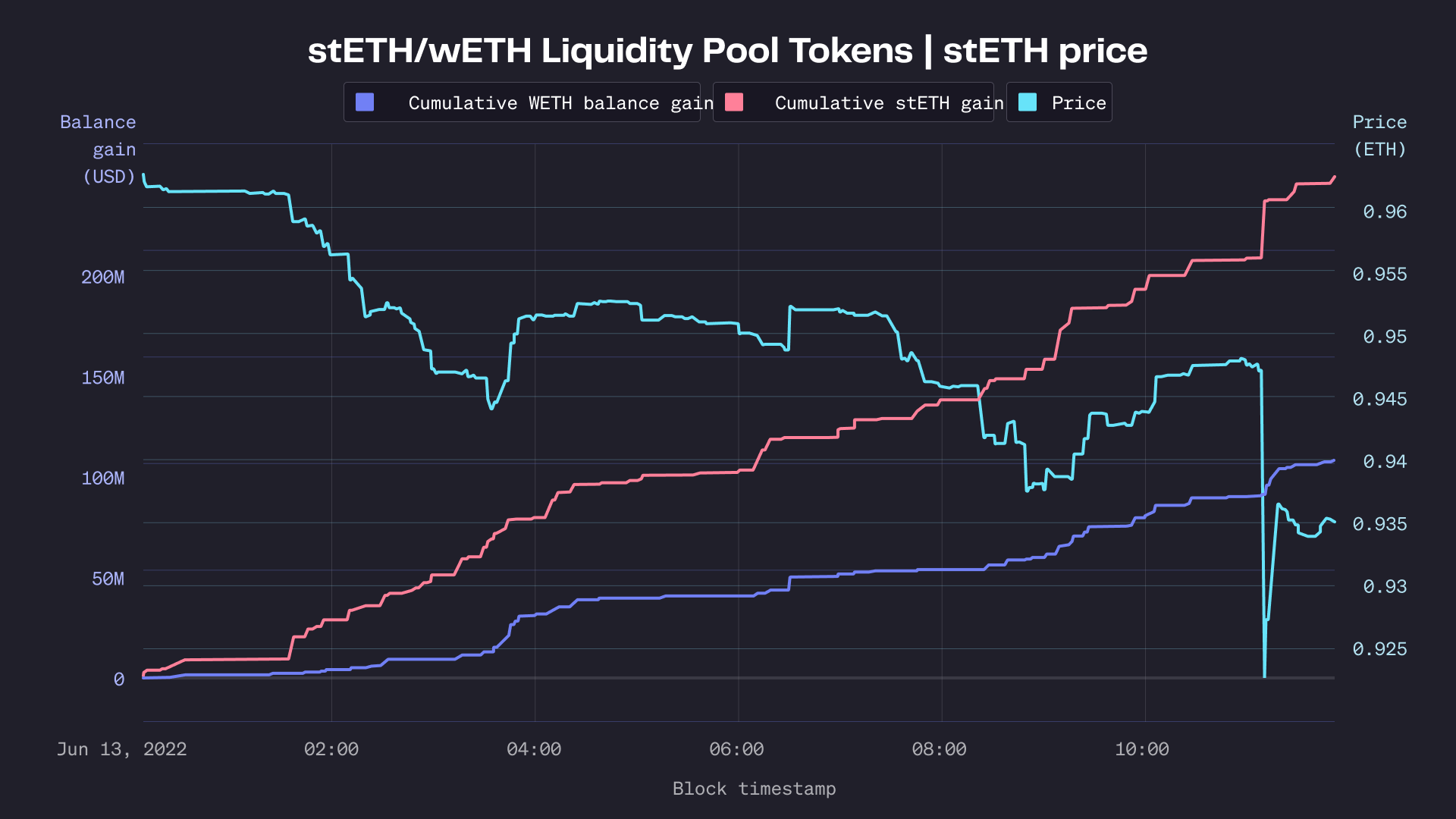
The image below illustrates the risk framework Gauntlet uses to evaluate these protocols. It visualizes how different LRTs layer risk, showing that higher yields often correlate with broader exposure to potential slashing events across multiple AVSs.
When choosing an LRT, you are effectively choosing which AVSs you trust to secure their services. Ether.fi offers the most diversified yield but also the most complex risk profile. Renzo and Kelp focus heavily on EigenLayer integration, while Puffer introduces its own vault mechanisms. Always verify the current TVL and active AVS integrations before committing capital, as these factors shift rapidly.
Smart Contract Audits and Security
Liquid restaking protocols are essentially complex financial machines, and like any machine, they have moving parts that can fail. The more layers of logic you stack—wrapping LSTs, adding yield boosters, and interacting with multiple Actively Validated Services (AVSs)—the larger the attack surface becomes. An audit isn't just a stamp of approval; it is a stress test against the specific ways these complex interactions can go wrong.
Formal verification has become a critical layer in this process. While standard audits check for common vulnerabilities, formal verification uses mathematical proofs to ensure the code behaves exactly as intended under all conditions. For LRTs, where a single logic error can lead to double-spending or unexpected slashing events, this distinction matters. You are not just looking for bugs; you are looking for logical consistency in high-stakes economic incentives.
Warning: Historical data from DeFi shows a direct correlation between protocol complexity and exploit frequency. The most sophisticated yield strategies often suffer the most catastrophic failures.
When evaluating an LRT, look for audit history from reputable firms like Gauntlet or Trail of Bits, but don't stop there. Check if they have performed formal verification on the core minting and redemption logic. The Gauntlet LRT Market Risk Framework provides a useful lens for understanding how these technical risks translate into market volatility. A protocol with a clean audit record but no formal verification is still a gamble, especially when the underlying assets are already exposed to slashing risk.
Building a Yield Optimization Strategy
Constructing an LRT portfolio requires balancing the pursuit of augmented yield against the complexity of layered risk. Unlike simple staking, liquid restaking introduces EigenLayer's Actively Validated Services (AVSs) as a secondary revenue stream, but also adds a new vector for slashing events. A robust strategy starts by defining your risk tolerance: are you maximizing yield for a long-term hold, or do you need liquidity for active trading?
Start with the base layer. Allocate a core position to established LSTs or LRTs with high TVL and audited smart contracts, such as those listed on EigenLayer's official documentation. These provide the foundational Ethereum staking yield (typically 3-4% APY) with the lowest protocol-specific risk. Treat this portion of your portfolio as your "safe" anchor, ensuring you capture the baseline network rewards without overexposing yourself to AVS-specific vulnerabilities.
Next, layer in higher-yield LRT protocols for the alpha. Platforms like ether.fi, Renzo, or Puffer offer boosted yields by optimizing restaking allocations across multiple AVSs. However, these yields come with smart contract risk and potential de-pegs during market stress. Limit exposure to these volatile assets to a smaller percentage of your total stake, ensuring you can exit positions if liquidity dries up or if an AVS failure triggers a cascade of liquidations.
Security is non-negotiable. Since LRTs are often used as collateral in DeFi lending protocols, a price drop or smart contract exploit can lead to liquidation. Use hardware wallets to store your LRT assets and interact with protocols through burner wallets for high-risk activities. This separation limits the blast radius of any single interaction, protecting your core staking rewards from accidental exposure to malicious contracts.


As an Amazon Associate, we may earn from qualifying purchases.
Common questions about LRTs
What is an LRT?
A liquid restaking token (LRT) is a single tradeable token issued when you deposit ether into a liquid restaking protocol such as ether.fi, Renzo, Kelp DAO, or Puffer. Liquid restaking is a crypto-economic security model where users take assets already staked on a base layer network and pledge them to secure additional decentralized applications (AVSs). In exchange for providing this secondary layer of security, users receive LRTs. These tokens represent the underlying stake plus the additional yield generated by the AVSs.
What is the difference between LST and LRT?
An LST yields the base network's staking rewards, such as the 3-4% APY for securing Ethereum. An LRT yields those base rewards plus additional rewards from each integrated protocol. Restaking takes your already-staked ETH and uses it to also secure additional services on top of Ethereum via EigenLayer. This process adds yield but also introduces slashing risk, as the staked capital is now securing more infrastructure than just the base layer.
How do LRTs work?
LRTs function by wrapping your staked assets into a liquid form that can be used across DeFi while simultaneously restaking them. This allows you to earn multiple streams of yield from a single deposit. For example, you might earn ETH staking rewards, points from the restaking protocol, and additional token emissions from the AVSs. The LRT token itself tracks the total value of these combined rewards, allowing for liquidity and composability that simple staking does not offer.
No comments yet. Be the first to share your thoughts!