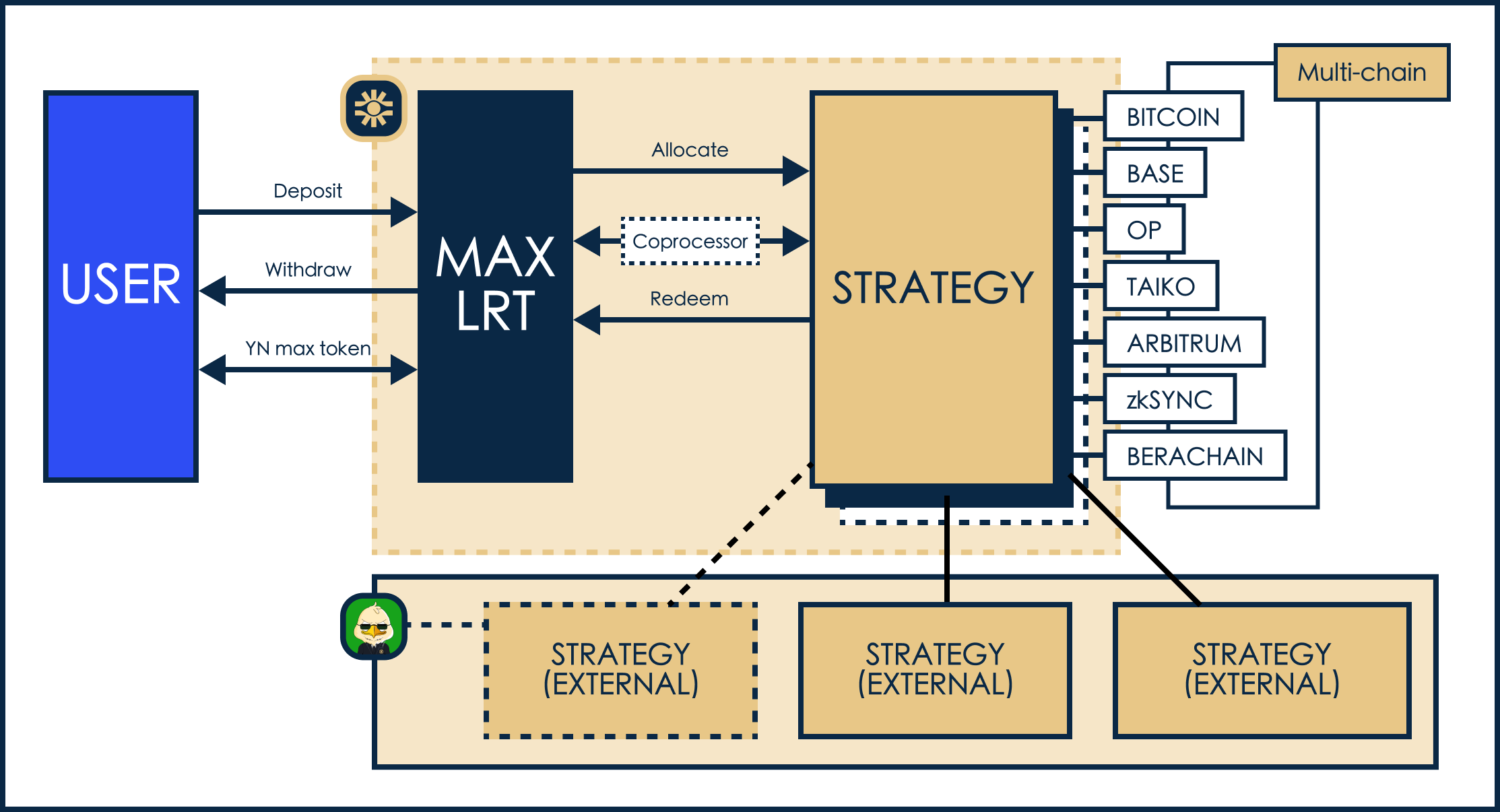
LRT yield constraints and limits to account for
Liquid Restaking Tokens (LRTs) promise higher yields by restaking ETH, but the actual return is rarely the sum of its parts. Yield comes from multiple sources: staking rewards, restaking incentives, and protocol-specific incentives. However, these rewards are often fragmented across different protocols, requiring complex management to capture.
LRT Yield Layer platforms attempt to solve this by consolidating yield strategies into a single interface. This allows holders to access a variety of yield sources with one click, reducing the friction of managing multiple positions. Yet, this convenience comes with a trade-off: you are relying on the platform's strategy selection and risk management. If the platform underperforms or suffers a smart contract vulnerability, your yield—and potentially your principal—is at risk.
The core constraint is that yield is not guaranteed. It fluctuates with network demand, protocol incentives, and market conditions. High yields often signal higher risk, such as exposure to less audited protocols or volatile incentive tokens. Before committing capital, review the specific strategies employed by the LRT provider. Look for transparency in how rewards are distributed and what assets back the yield. Understanding these mechanics is essential for managing expectations and avoiding overexposure to any single yield source.
LRT yield choices that change the plan
Liquid restaking tokens offer higher potential returns by stacking rewards from multiple protocols, but they introduce distinct risks compared to traditional liquid staking. To evaluate these tradeoffs, you must look beyond the headline yield percentage. The actual return depends on the underlying strategies, the security of the active validation services (AVSs) involved, and the liquidity depth of the token itself.
Core Factors to Evaluate
When choosing an LRT strategy, focus on these concrete variables:
- Yield Source Composition: Determine how much yield comes from base staking versus restaking rewards. Higher yields often rely on volatile AVS incentives, which can fluctuate or disappear.
- Slashing Risk Exposure: Restaking amplifies exposure. If an AVS fails, your LRT may suffer slashing events that reduce principal, a risk absent in simple staking.
- Smart Contract Complexity: Each added protocol layer increases attack surface. Audit history and bug bounty programs are critical indicators of safety.
- Liquidity and Exit Friction: Some LRTs trade at significant discounts to their net asset value (NAV) during market stress, making exits costly.
Use case choices that change the plan
Your decision should align with your risk tolerance and investment horizon. For conservative holders seeking steady, predictable returns with minimal operational risk, traditional LSTs remain the safer baseline. They offer deep liquidity and lower complexity, though they cap your upside.
For investors willing to accept higher volatility and technical risk for enhanced yields, LRTs provide access to layered reward streams. However, this comes with the responsibility to monitor AVS performance and protocol updates closely. The additional yield is not free; it is compensation for taking on systemic and operational risks.
LRT yields are higher but carry more risk. Evaluate yield sources, slashing exposure, and liquidity before committing capital.
Choose the next step
LRT Yield Layer aggregates multiple yield strategies into a single interface, but selecting the right path depends on how much infrastructure risk you are willing to absorb. The decision framework below breaks down the primary options based on yield stability, complexity, and potential drawdowns.
Before allocating capital, determine if you prioritize capital preservation or maximum yield. Conservative investors should lean toward strategies with lower smart contract exposure and established track records, while aggressive investors may accept higher infrastructure risk for enhanced returns.
Review the underlying mechanisms powering MAX LRTs. Strategies range from simple staking to complex vector-based optimizations. Understanding the specific yield-generating mechanisms helps you identify where potential bottlenecks or failures might occur.
Every LRT strategy introduces smart contract and operational risk. Check for audit history, bug bounty programs, and treasury management practices. Higher yields often correlate with less battle-tested infrastructure.
Once you have selected a strategy, use the LRT Yield Layer to consolidate your position. One-click execution simplifies the process, but ensure you understand the exit conditions and liquidity constraints before committing funds.
Watchouts for LRT Yield Strategies
LRT yield strategies promise passive income, but the mechanics behind them hide significant risks. Most platforms consolidate yield sources into a single vector, masking the underlying complexity. You need to look past the headline APY to understand what is actually generating that return.
Weak Options to Avoid
Many protocols offer "one-click" access to yield, but this convenience often comes with hidden tradeoffs. Some strategies rely on unstable liquidity pools that can drain rapidly during market volatility. Others use complex leverage that amplifies losses as much as gains. Always check if the yield source is sustainable or if it is simply printing new tokens.
Common Mistakes
A frequent error is assuming all LRTs are created equal. Some protocols use conservative strategies with lower returns but higher safety, while others chase high yields with risky exposures. For example, Yield Layer allows holders to access multiple sources, but this consolidation can dilute control over specific risk factors. Similarly, Yield Nest uses underlying strategies that must be audited for their specific vulnerability profiles. Ignoring these differences can lead to unexpected losses.
Evaluating LRT Yield Strategies
Before committing capital, compare the actual yield sources. Look for protocols that provide transparent documentation on their strategy mechanics. Use a comparison table to weigh the tradeoffs between safety and return. If a strategy seems too good to be true, it likely is. Prioritize protocols with official audits and clear risk disclosures over those with flashy marketing.
LRT yield: what to check next
Liquid Restaking Tokens (LRTs) combine staking rewards with additional returns from Active Validation Services (AVSs) to create a multi-layer yield structure. While this stacking mechanism can boost returns, it introduces complexity and risk that differs significantly from standard liquid staking.
These answers address the practical tradeoffs between yield potential and infrastructure risk. Understanding these mechanics helps you decide if LRTs fit your risk profile.
No comments yet. Be the first to share your thoughts!